Meaning
UHMW-PE is ultra-high molecular weight polyethylene, a tough, low-friction, wear-resistant stock sold under names such as TIVAR 1000. The TIVAR 1000 sheet states a molecular weight of 4.0 to 5.4 million under ASTM D4020. Tangram Technology rates it as difficult to machine, very tough and stringy. It also names it among the materials better suited to machining than to extrusion and molding.Sheet Values
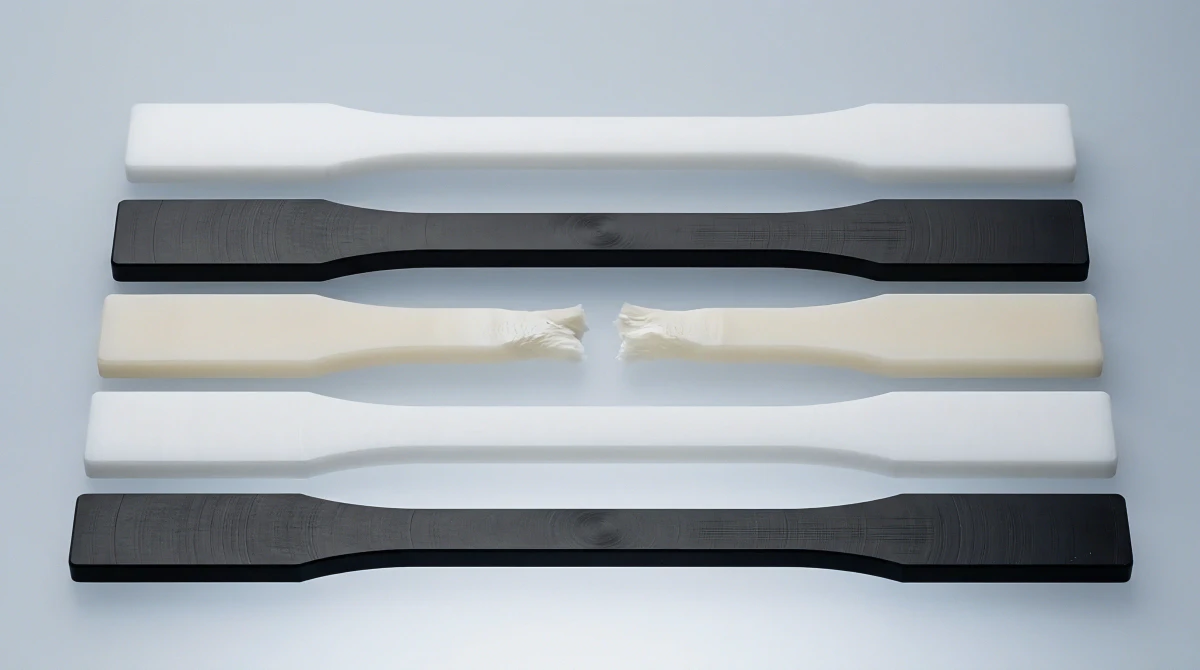
The TIVAR 1000 sheet lists a density of 0.93 g/cm³ (58.01 lb/ft³) and water absorption of nil. Yield is 21.0 MPa (3,050 psi) at 15 percent elongation. Break comes at 40.0 MPa (5,800 psi) and 250 percent. A design read from the break figure would be disappointed, because the bar yielded at roughly half that stress. Tensile modulus is 827 MPa (120,000 psi), and flexural modulus is 758 MPa (110,000 psi). Hardness reads Shore D 68. All values are typical and, in the sheet’s words, not a basis for design specifications.Read More
Wear Duty
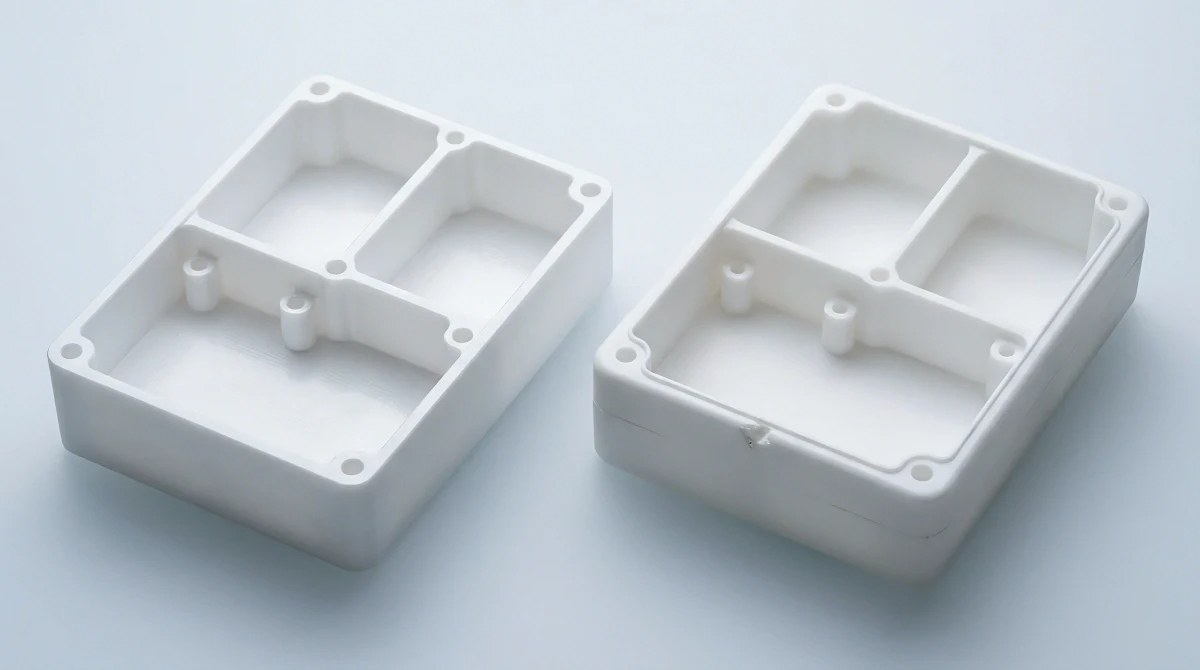
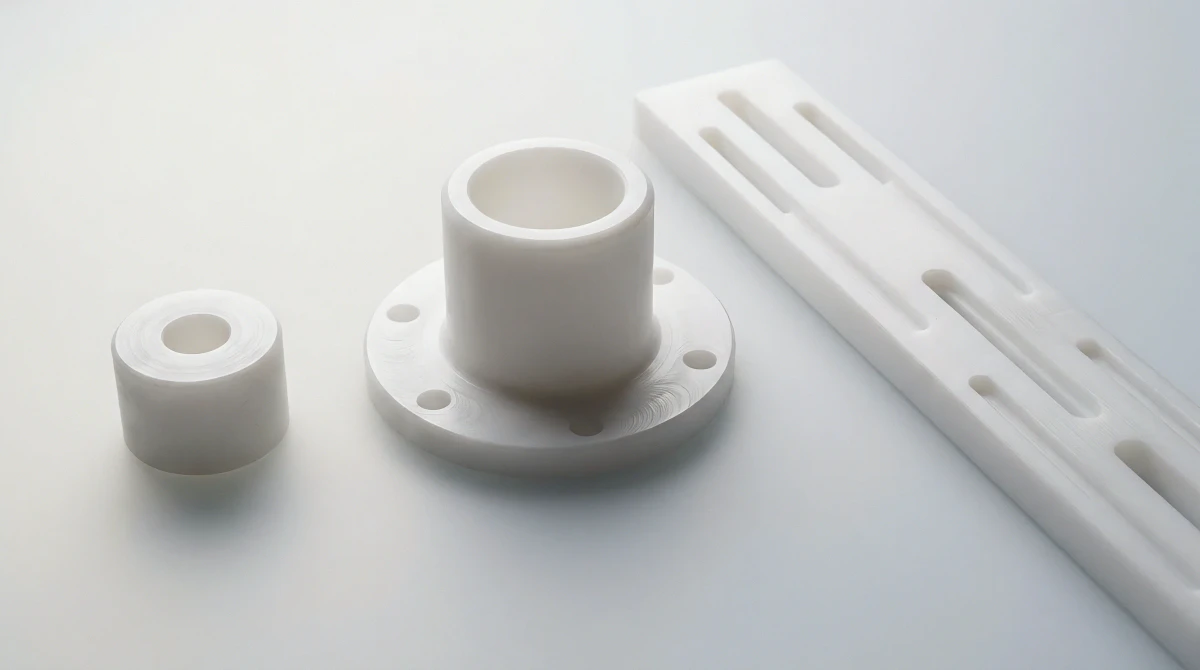
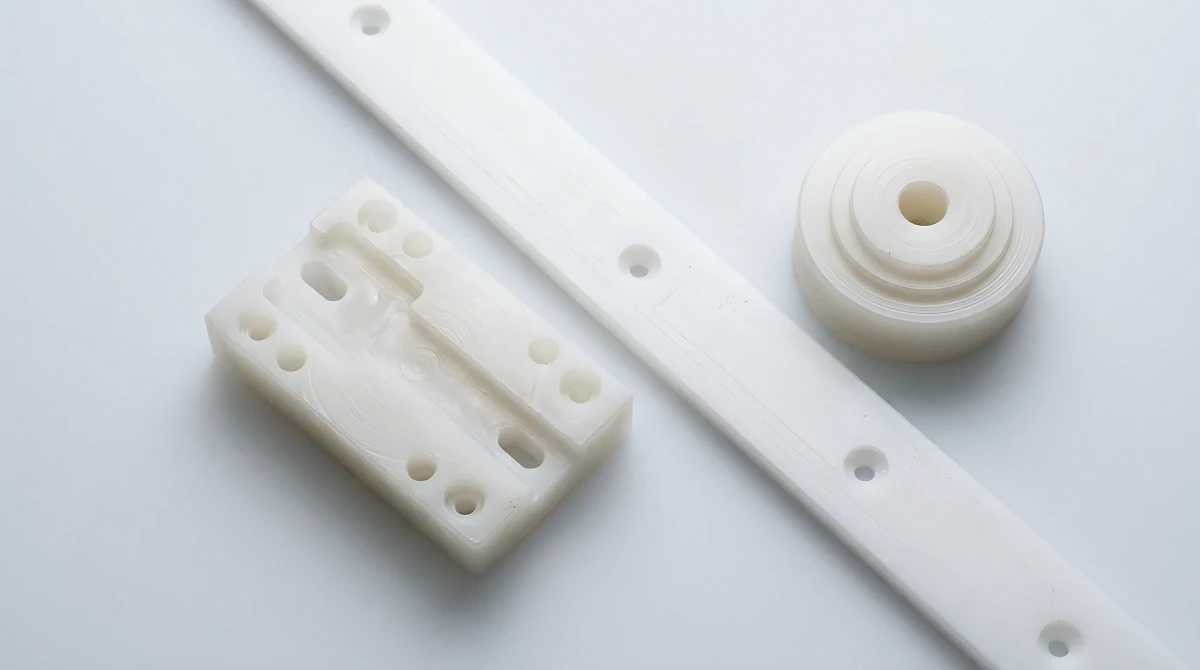
The same sheet lists sand-wheel wear under ASTM G65 of 90, against 100 for AR-01 steel. Static friction is 0.15, and dynamic friction is 0.12 under ASTM D1894. Tensile impact under DIN 53448 is about 2,200 kJ/m² (1,050 ft-lb/in²). That is roughly twice the HDPE figure of about 1,200 kJ/m² (570 ft-lb/in²). The sheet’s applications include chain guides and tensioners, wear strips, bearings, sprockets and hopper liners. Guide rails, rollers, scraper blades and gears complete the list. The polyethylene article pairs part features with the grade the sources favor. Sliding or abrasive contact leans to UHMW-PE, for its wear and friction figures. Thin walls, tall features and parts that must stay flat under load lean to HDPE, for its higher modulus and lower expansion. Heat above about 80 °C (176 °F) rules out both.Service Limits
Compressive deformation is 6 to 8 percent at 6.9 MPa (1,000 psi), so a loaded pad gives way measurably. The maximum operating temperature is 82 °C (180 °F). The melting point is 137.8 to 142.8 °C (278 to 289 °F). The annealing guides disagree on its hold. Quadrant’s 2014 edition gave 80 °C (176 °F) and Mitsubishi’s 2026 guide gives 130 °C (266 °F), for polyethylene as each groups it.Cutting Behavior
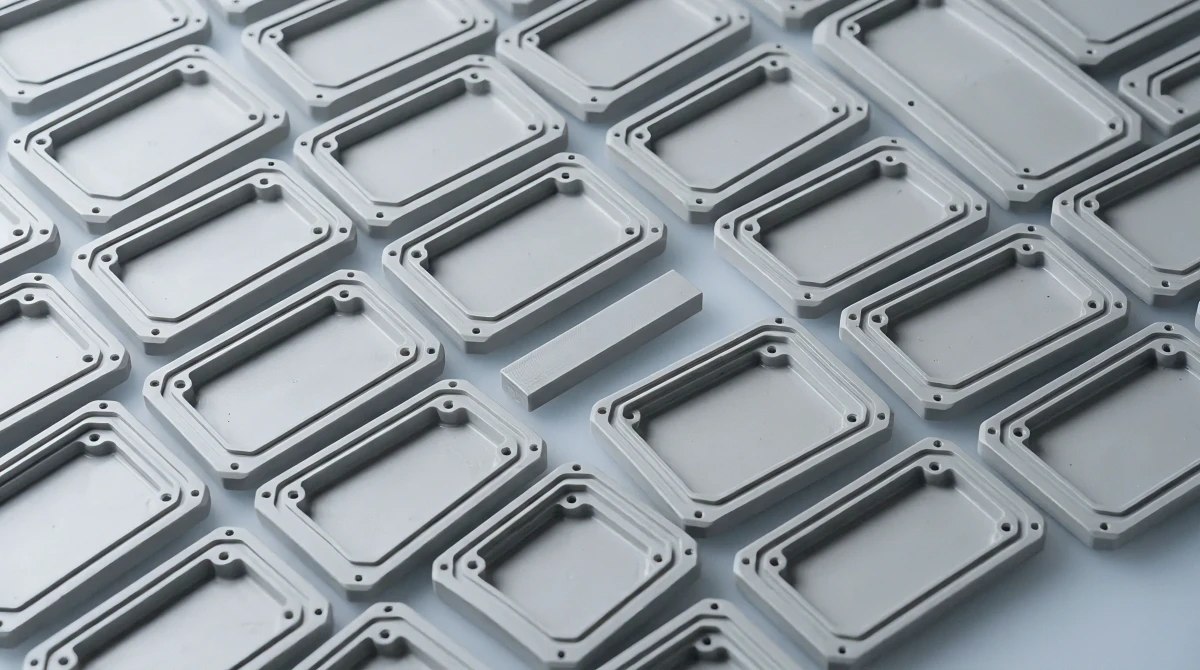
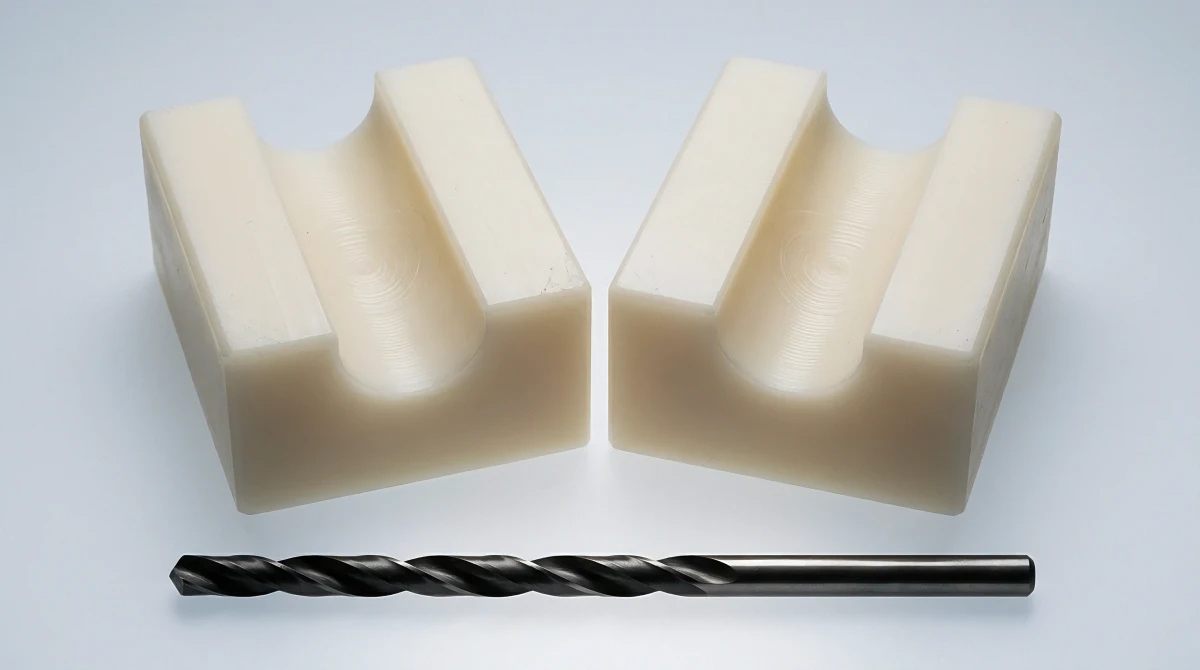
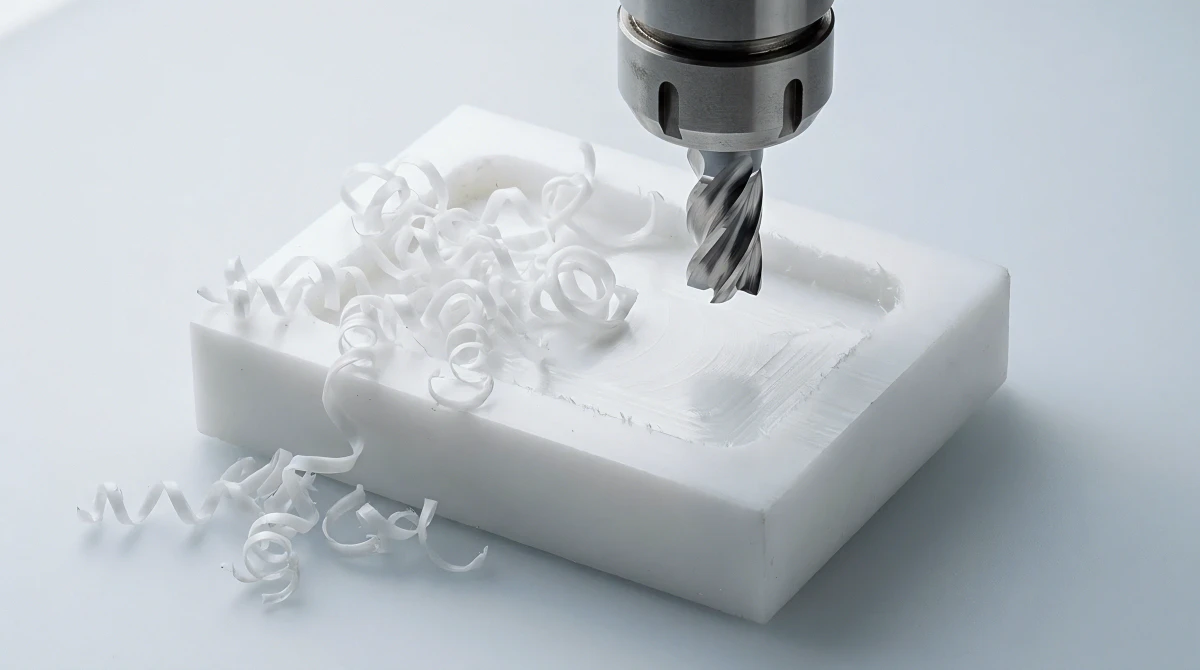
Tangram lists severe burrs, chip wrap, part deflection and heat from recut swarf as UHMW-PE’s faults. It recommends an air blast or vacuum to move the swarf away. Mitsubishi advises maximum feed and speed for the softest stocks, with large clearance and two or three flutes at a higher helix. High-speed steel works well on them, while solid carbide is stiffer. Tangram’s indicative data give 200 to 500 m/min (655 to 1,640 ft/min) for turning and milling. Milling feed runs up to about 0.5 mm (0.020 in) per tooth, with burr control. Mitsubishi marks one flame-retardant UHMW-PE grade as dry machining only, with compressed air. A UHMW-PE web or flange flexes away from a cutter more than the same shape in HDPE, because its modulus is lower. Tangram warns that plastics deform under clamp pressure far sooner than metals do. A UHMW-PE plate clamped hard in a vise springs back out of flat when the jaws open. Vacuum tables, soft jaws bored to the part and fixtures that spread the load are the usual answers. Cutting thin features last is a shop habit rather than a published rule. For thick plate with deep pockets, a rest between roughing and finishing is a cheaper first move than an anneal.Thermal Size Change
Linear thermal expansion on the TIVAR sheet is 198 x 10⁻⁶ per K (11 x 10⁻⁵ in/in/°F). A 100 mm (3.94 in) feature therefore grows about 0.20 mm (0.008 in) over 10 K (18 °F). That is 16 times the steel figure that NIST gives for comparison. Mitsubishi’s best-tolerance table has no UHMW-PE column. Its expansion is nearly double that of HDPE. A reasonable reader would not expect a tighter band than the HDPE column, though the guide does not say so. The temperature at measurement is part of the tolerance.Purchase Order Wording
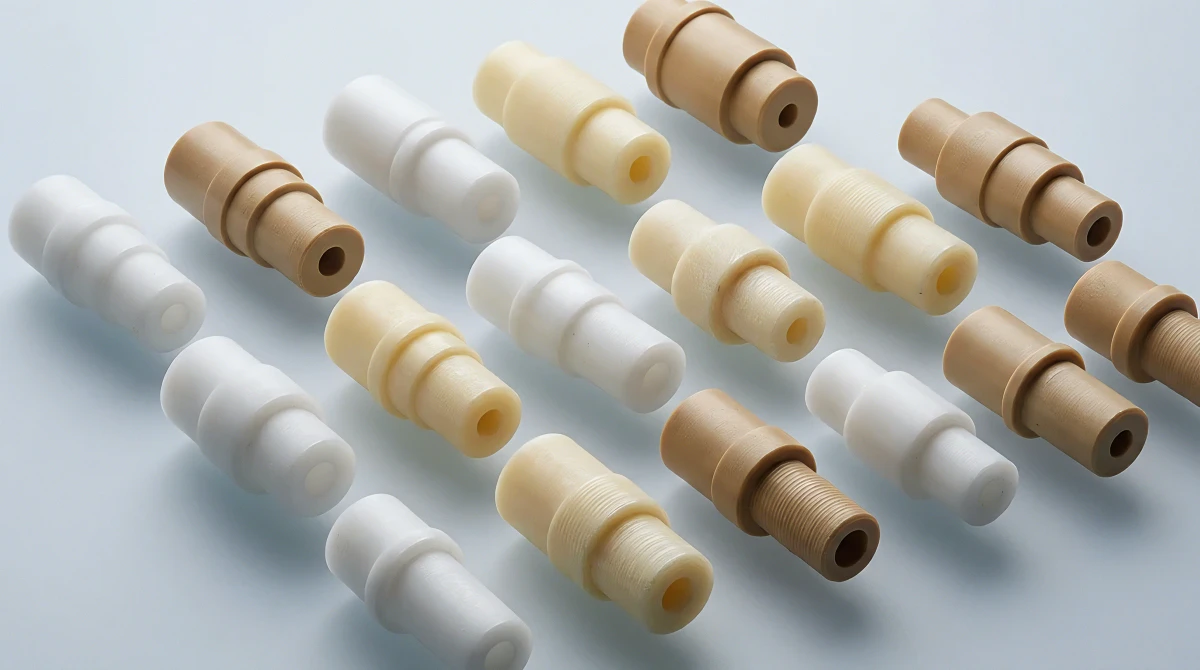
A durometer cannot tell UHMW-PE from HDPE at the receiving dock, since Shore D reads 66 to 68 across the sheets. The grade comes from the certificate and the bar’s marking. A purchase order names the polymer, the grade or maker designation, the color if it matters, and the shape and size. The TIVAR sheet shows why the maker belongs on it, because its molecular weight band and ASTM D4020 reference are specific to that bar.