Meaning
Stress relaxation is the slow release of internal stress after material is removed or heat is applied. It shows as a part moving after machining. Tangram Technology lists parts moving after machining through stress relaxation among the common faults. Ensinger names it, with moisture uptake and heat input, as a factor of dimensional stability. It is the reason a part measured too early can pass and then fail.Movement After Cutting
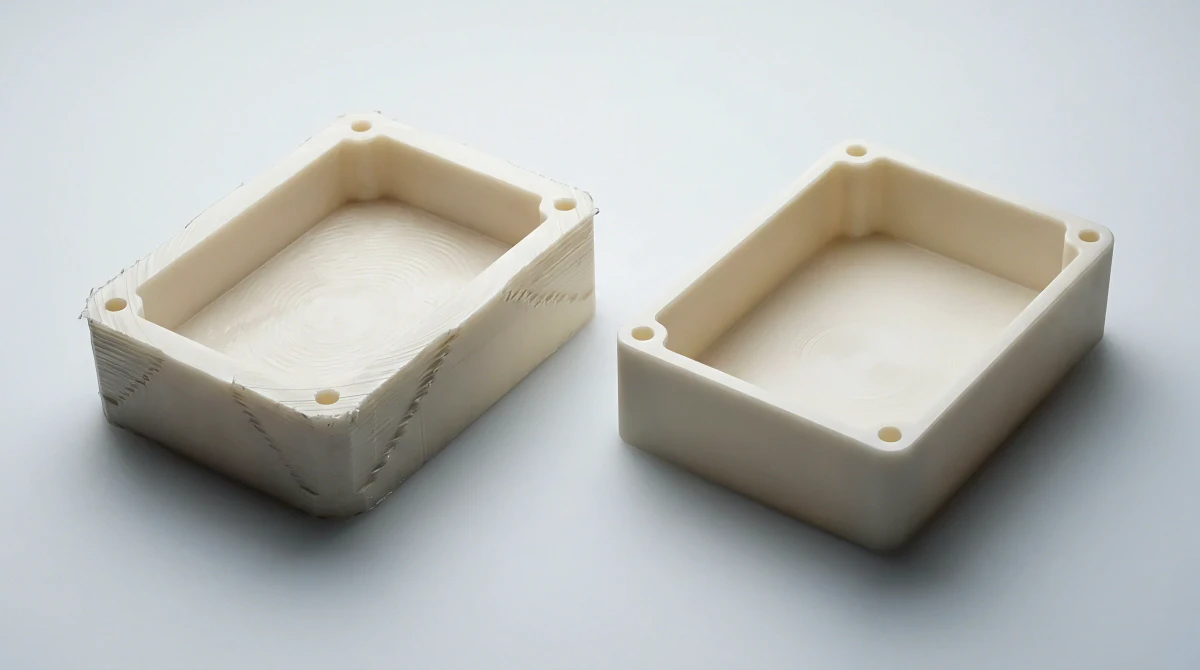
Mitsubishi explains that extrusion, molding and machining can leave residual stresses. When material is removed or the part is heated, those stresses redistribute and can warp it. Acetal stock with stress left in it can release a share when a pocket is cut. The movement is largest where a part loses much material unevenly.Read More
Time Scale
The makers’ own times show that relaxation runs over days. Mitsubishi’s turning tips leave roughed sections for 24 hours before finishing. Quadrant asks for at least 48 hours in normal ambience. A part measured an hour after the finishing cut and again a week later can differ. The inspection record states which one it is.Measurement Effect
ASTM D696 lists the release of stresses among the length changes that sit on top of thermal expansion. Its test tries to exclude them, so a published expansion coefficient does not contain them. On a freshly cut part, cutting heat, stress release and moisture all overlap. Only a reading after rest, at a stated temperature, gives the size the part keeps.Control Method
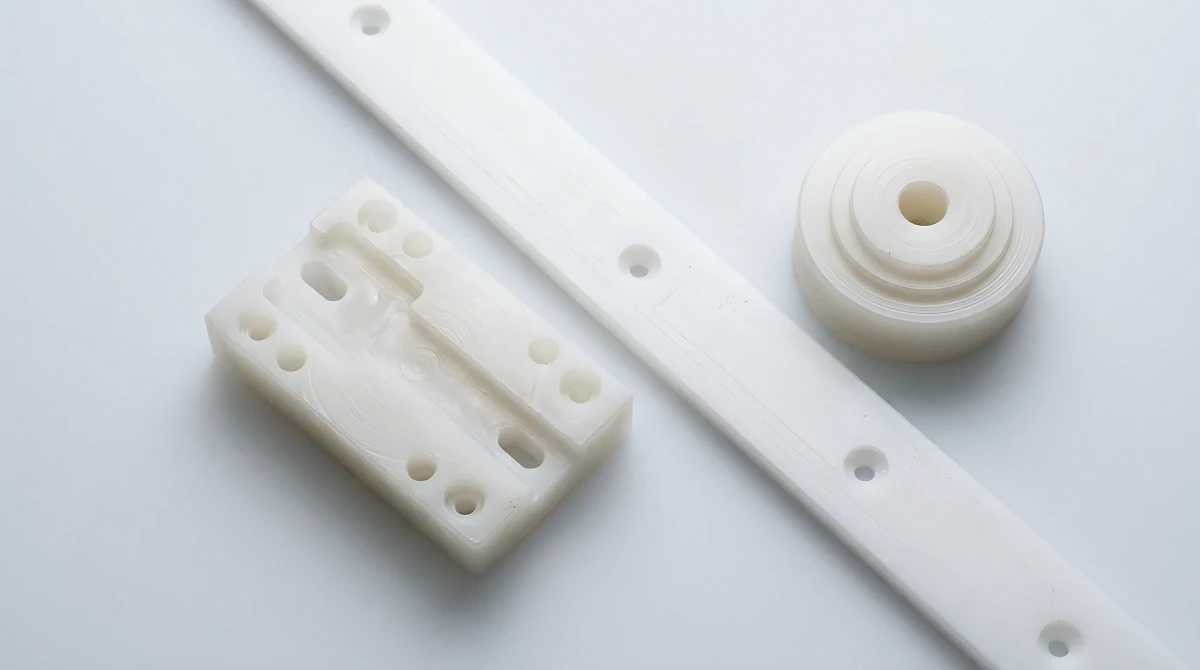
Tangram advises using annealing selectively, only where it adds value. For thick UHMW-PE plate with deep pockets, a rest between roughing and finishing is a cheaper first move. Where the part will run hot or hold a close size, the anneal moves the relaxation into the shop. There it can be measured and cut away.