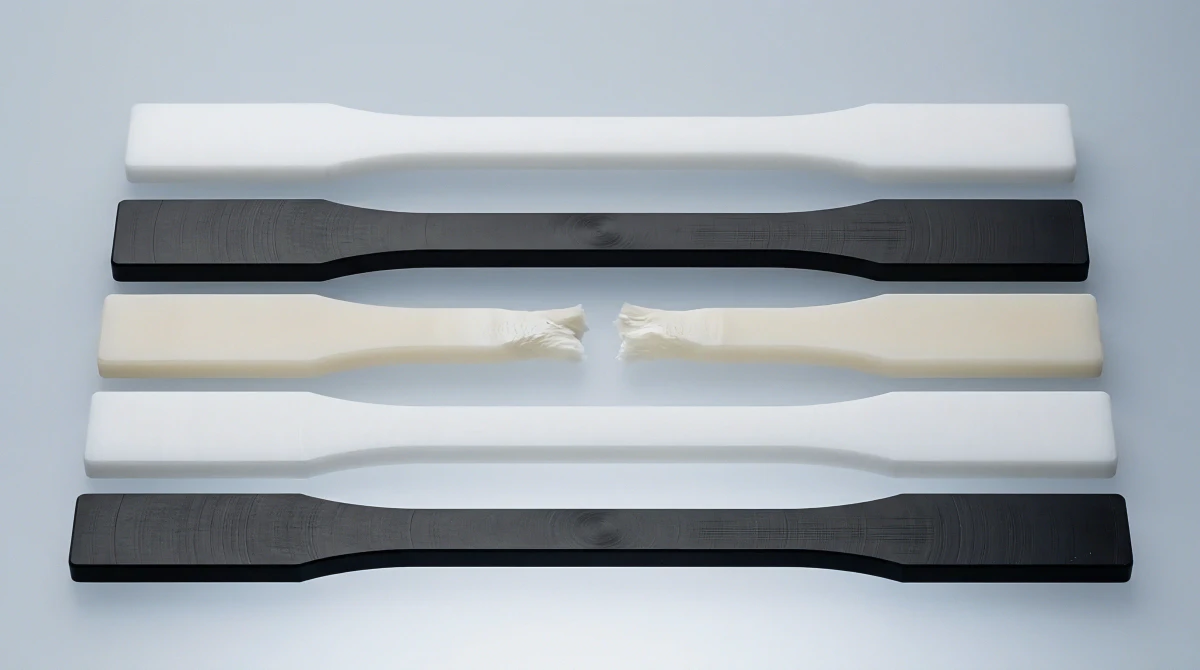
ASTM D6100

ASTM D6100 is the standard specification for extruded, compression molded and injection molded polyoxymethylene (acetal) shapes.

Every ASTM D6100 article of the Plastic CNC Resources, newest first, each written from published standards, research and makers’ data.

Meaning

ASTM D6100 is the standard specification for extruded, compression molded and injection molded polyoxymethylene (acetal) shapes. It covers sheet, plate, rod and tubular bar, excluding pipe and fittings. It sets requirements and test methods for material, dimensions, workmanship and properties. It is the shapes standard a drawing names beside the acetal chemistry and grade.

Property List

The public page lists the properties a shape has to meet. They are tensile strength, elongation at break, tensile modulus, dimensional stability, flexural modulus, Izod impact and porosity level. The last is the one that matters most for fluid-holding parts, since acetal rod and plate carry a porous centerline.
Read More

Dimensional Requirement

A shape also meets requirements for thickness tolerance, length camber and width bow. A part machined from the full thickness of a plate inherits them. The raw bar needs enough oversize to clean up. EN 15860 plays a similar role for thermoplastic semi-finished products in general.

Fill and Reinforcement

The specimen may be pure polyoxymethylene or filled, lubricated or reinforced. The standard names carbon fiber, graphite, glass, PTFE, silicone, molybdenum disulfide and minerals. A call-out of POM under D6100 alone therefore leaves homopolymer, copolymer and every filled variant open.

Edition Status

The astm.org page lists the 2011 edition as historical, last updated 21 May 2014. Data sheets still cite it: Ensinger’s TECAFORM AH sheet gives D6100-11 S-POM211, and the Delrin 150 sheet D6100 S-POM0111. Resin has its own specification, ASTM D4181 and its successor D6778. A claim that a bar meets D6100 covers the shape, and a resin claim covers the pellet. A call-out names the edition it means.
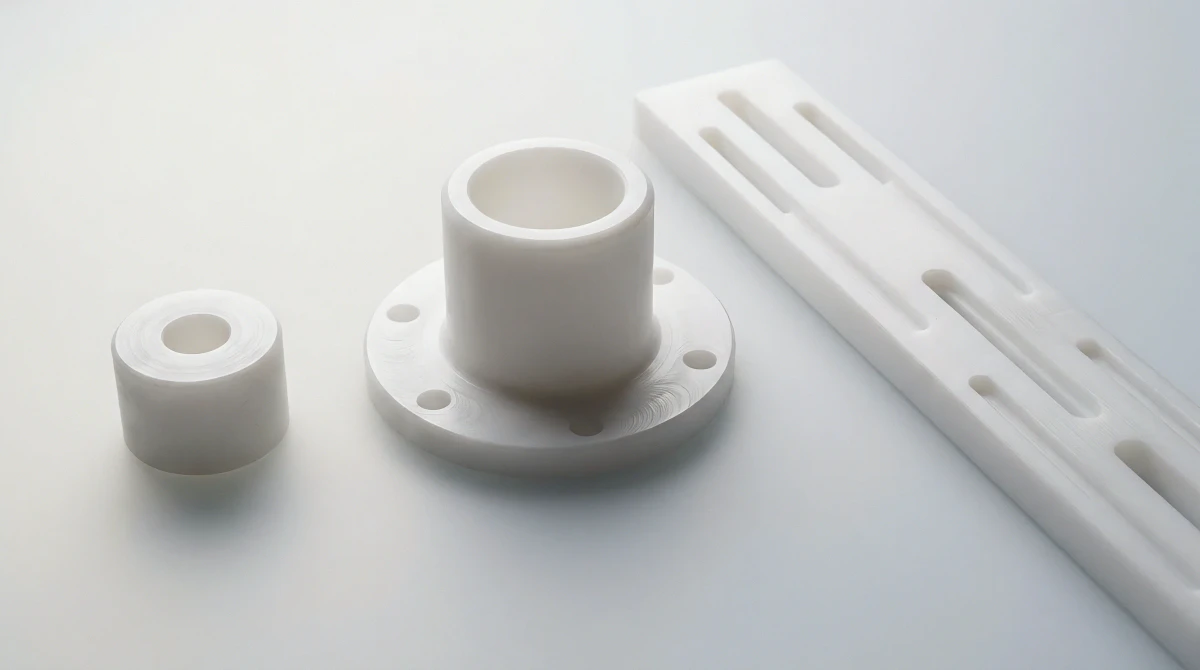
Machining Tolerances by Part Size for Engineering Plastics

Published plastic tolerances widen with feature size and split by polymer group, so a drawing has to state size, grade, temperature and rest.

Published Machining Tolerances by Feature Size and Material GroupTable 1 reproduces the Mitsubishi table for nine of its sizes, with inches beside each figure. The five groups are the guide's own: HDPE; the group that holds PET-P, PC, PEEK, PTFE 500, PPS, PEI, PPSU and PSU; the group that holds PA, POM and PTFE 207; PEEK with fillers; and PAI with PBI.

ASTM D638 Tensile Strength on Plastic Stock Data Sheets

A tensile figure on a data sheet belongs to one bar, one speed and one reading, so the sheet has to name all three before the number guides a design.

What ASTM D638 CoversThe scope of ASTM D638, Standard Test Method for Tensile Properties of Plastics, is the determination of the tensile properties of unreinforced and reinforced plastics in the form of standard dumbbell-shaped specimens, tested under defined conditions of pretreatment, temperature, humidity and testing machine speed. On astm.org the 2022 edition is listed as active.

Acetal Homopolymer and Copolymer Stock for CNC Machined Parts

Homopolymer is stiffer and harder, copolymer is sold porosity-free with less water uptake and less thermal growth, and the stock a part is cut from decides which it inherits.

Acetal Homopolymer and Copolymer Differences in Machined PartsAcetal, the polyoxymethylene or POM family, reaches a machine shop as two chemistries. Homopolymer chains repeat one unit; copolymer chains carry two.

Request a Plastic CNC Quote

Send the 2D drawing and the 3D file, with the quantity and the stage of the project. An engineer replies within 1 working day.

The quote form, the mutual NDA and the private folder for your files are on Protolis Atelier, with Plastic CNC chosen.

Request a Quote