Operation

Every Operation article of the Plastic CNC Resources, newest first, each written from published standards, research and makers’ data.

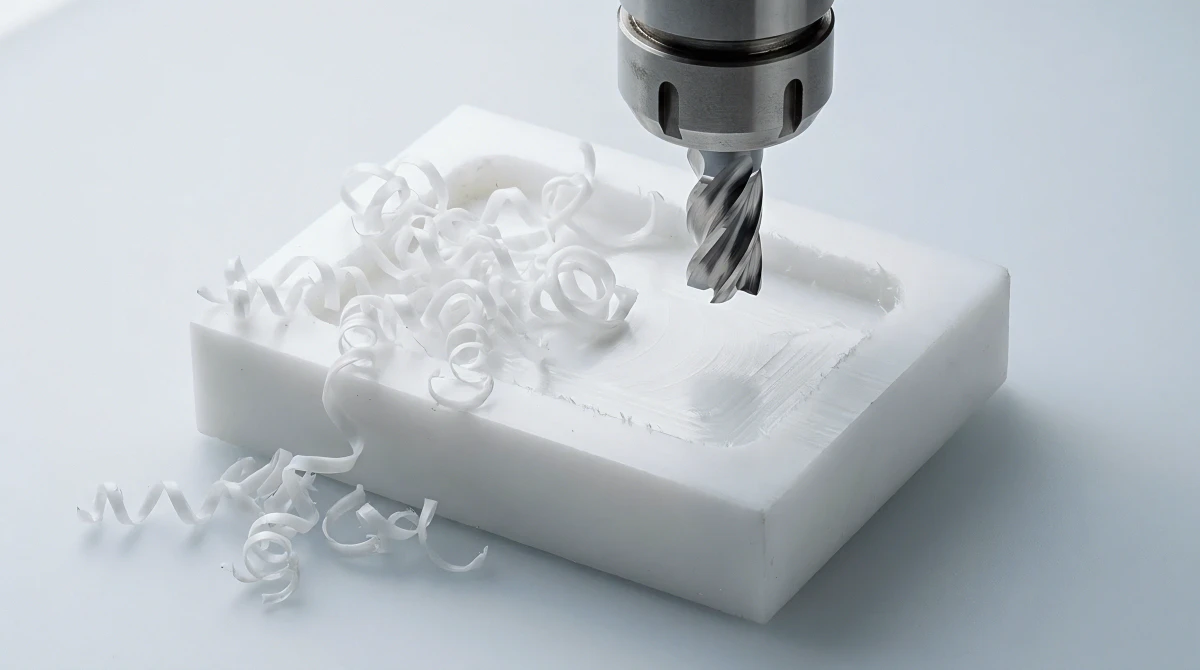
Cutting Plastic

Machining plastic step by step: sharp tools and the speeds and feeds that keep chips carrying the heat away, workholding that grips without bending, deep holes drilled without melting or cracking, and annealing between roughing and finishing so the released stress does not move the finished dimensions.

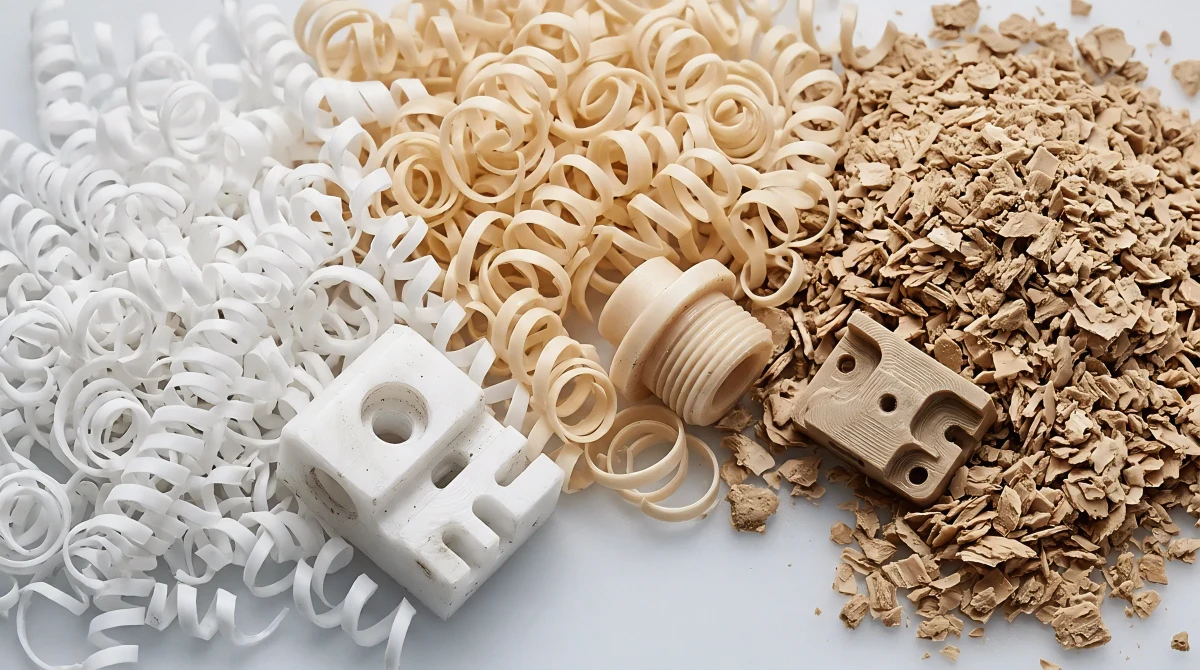
Speeds and Feeds for Machining Acetal, Nylon and PEEK

Acetal, nylon and PEEK share wide published cutting windows, and the right point inside each depends on making a chip that carries heat out of the part.

Speeds and Feeds for Acetal, Nylon and PEEK in One TableTable 1 sets the published cutting data for the three materials side by side, from MCAM's 2026 guide and from Tangram Technology, a UK plastics engineering consultancy that publishes indicative values. MCAM groups unfilled PEEK with PET-P and PAI, and filled PEEK with the other reinforced grades; Tangram does not list PEEK.
Drilling Deep Holes in Plastic Without Melting or Cracking

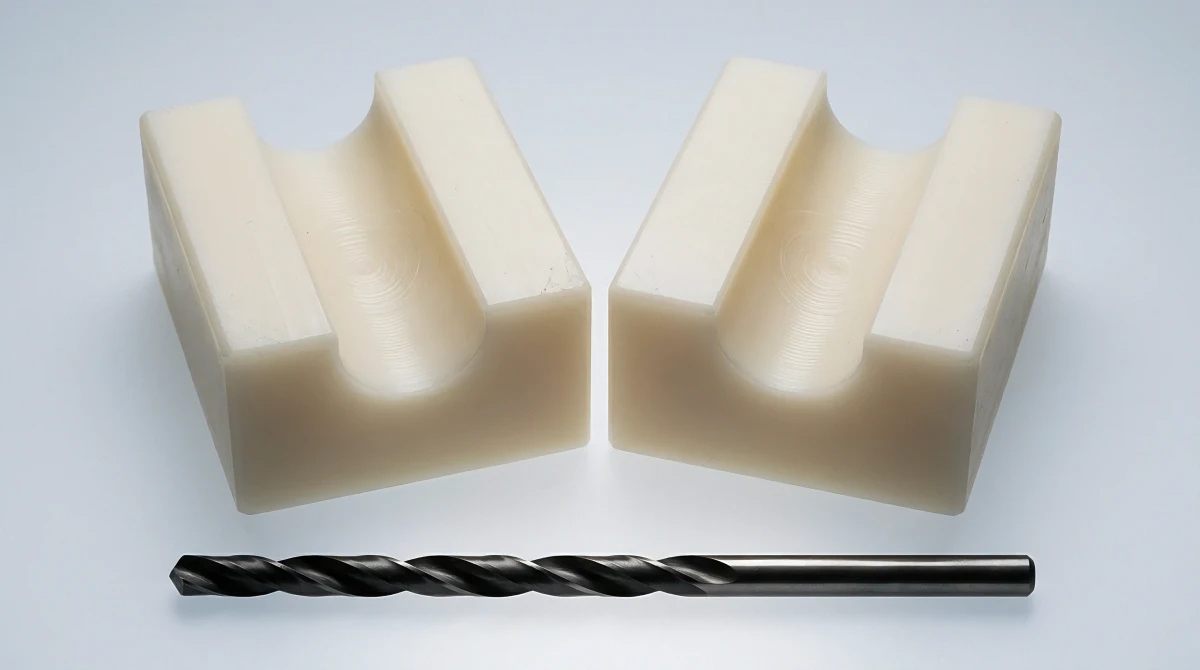
Holes deeper than two diameters trap heat in plastic, so drill grind, peck cycle, coolant choice and cool-down decide whether the part cracks or holds its size.

How to Drill a Deep Hole in Plastic Without Melting or CrackingTreat any hole deeper than two diameters as a cooling problem first and a cutting problem second. Both Mitsubishi Chemical Advanced Materials (MCAM) and Ensinger name the same threshold: heat builds very easily once the depth passes twice the diameter.

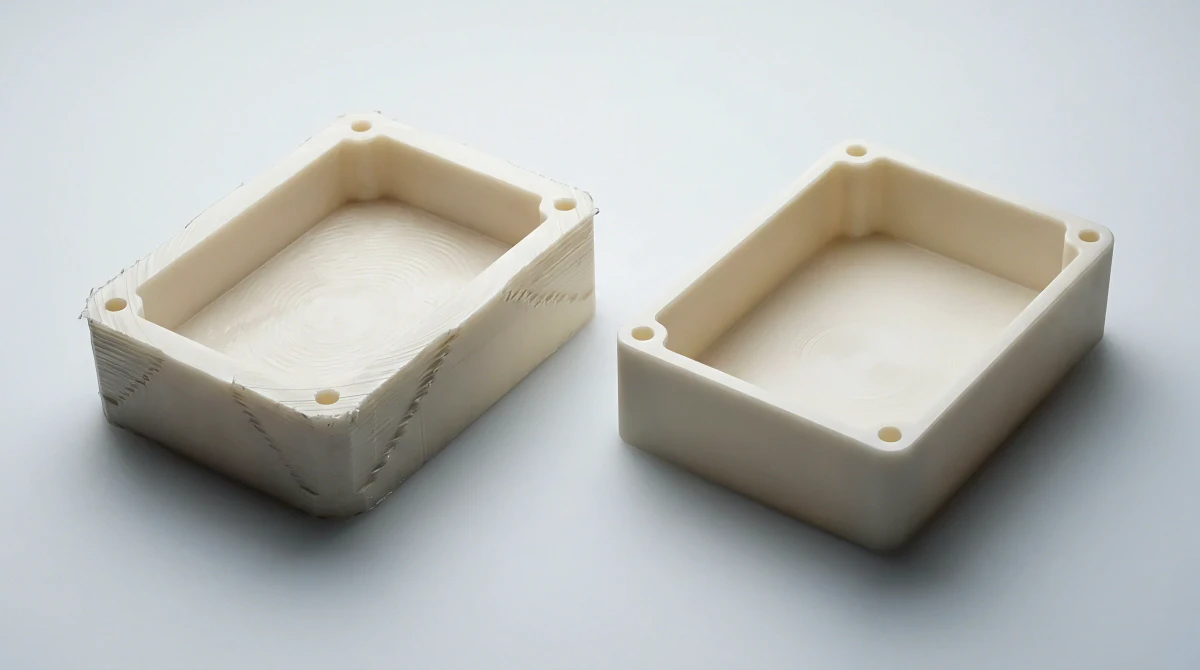
Holding Plastic Parts for CNC Machining Without Bending Them

Plastic parts distort under clamps that metal parts shrug off, so the hold, the support and the symmetry of the cut set the final size.

How to Hold a Plastic Part on a CNC MachineHold it on as much surface as the geometry allows, with the lowest force that keeps it from moving, and with every thin wall backed by something solid. That sentence compresses three recommendations that recur across the stock-shape makers' guides: light clamping, support under the cut, and distribution of the force by vacuum or soft jaws instead of point contact.

Annealing Machined Plastic Parts Between Roughing and Finishing

Annealing between roughing and finishing trades oven days for flat, stable parts, and it pays only when stress, shape or tolerance demand it.

When a Machined Plastic Part Needs AnnealingA machined plastic part needs an intermediate anneal when it has tight tolerances, an asymmetric shape, or a large share of its blank removed, and when it does not need one the stock maker has already done the work. Ensinger states the starting condition: its semi-finished products are always annealed after production, which is why a first cut can start without a stress-relief step.

Request a Plastic CNC Quote

Send the 2D drawing and the 3D file, with the quantity and the stage of the project. An engineer replies within 1 working day.

The quote form, the mutual NDA and the private folder for your files are on Protolis Atelier, with Plastic CNC chosen.

Request a Quote