Meaning
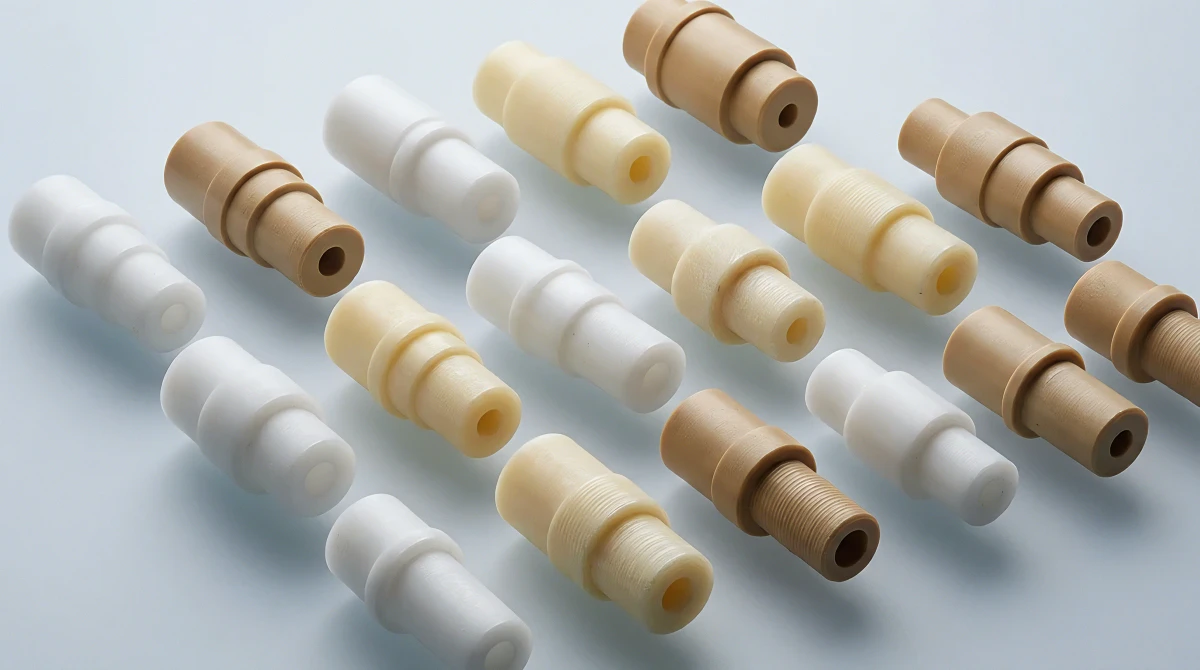
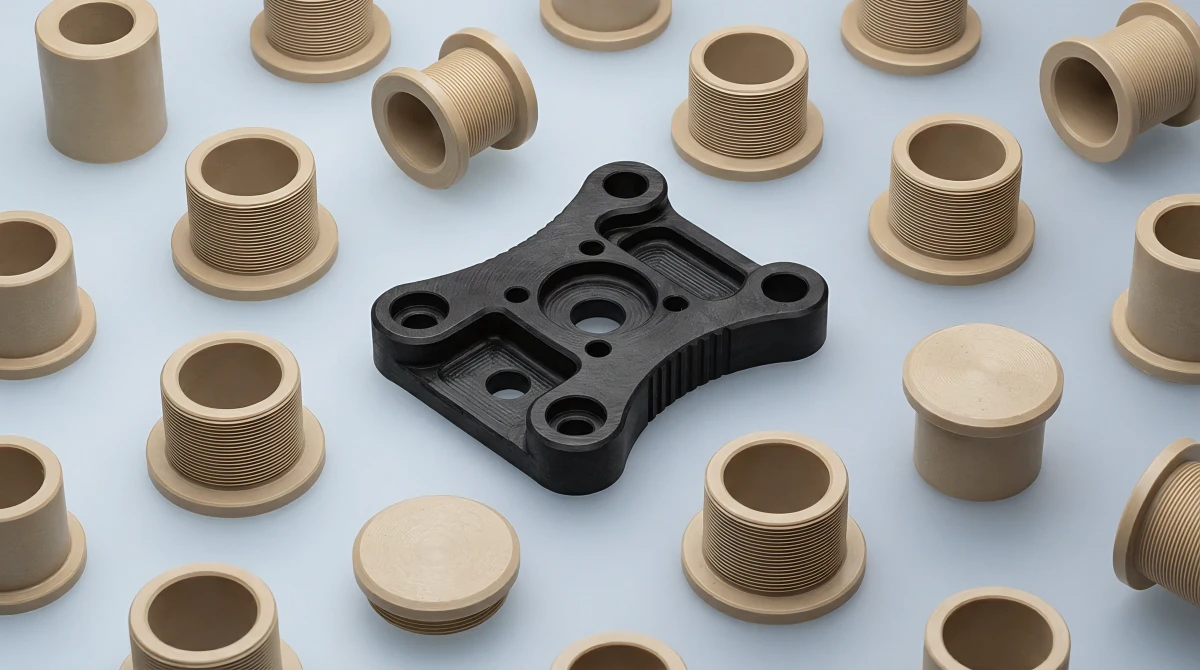
Turning is cutting a rotating plastic rod or blank with a single-point tool on a lathe to make round features. It produces the longest chips of any plastic operation. Its surface speeds are high, its clamping loads are light, and its parts tend to grow after cutting.Cutting Data
Mitsubishi’s 2026 turning table runs from 200 to 500 m/min (656 to 1,640 ft/min) for polyamide, UHMW-PE and acetal. Feeds run 0.05 to 0.5 mm/rev (0.002 to 0.020 in/rev), with HSS or carbide. Rake is 0 to 10 degrees and relief 5 to 15 degrees for most families. Speeds and feeds fall as the grade gets harder or more abrasive. Mitsubishi points to a nose radius of 0.8 mm (0.03 in) for the best finish, with inserts made for aluminum or brass.Read More
Chip Control
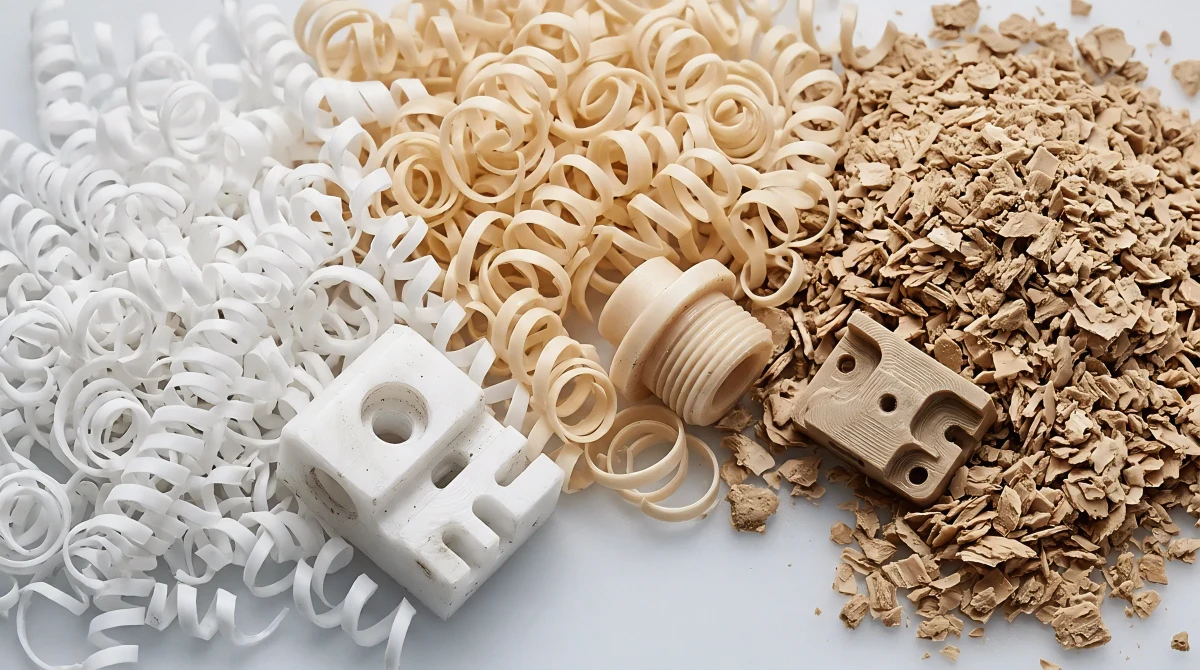
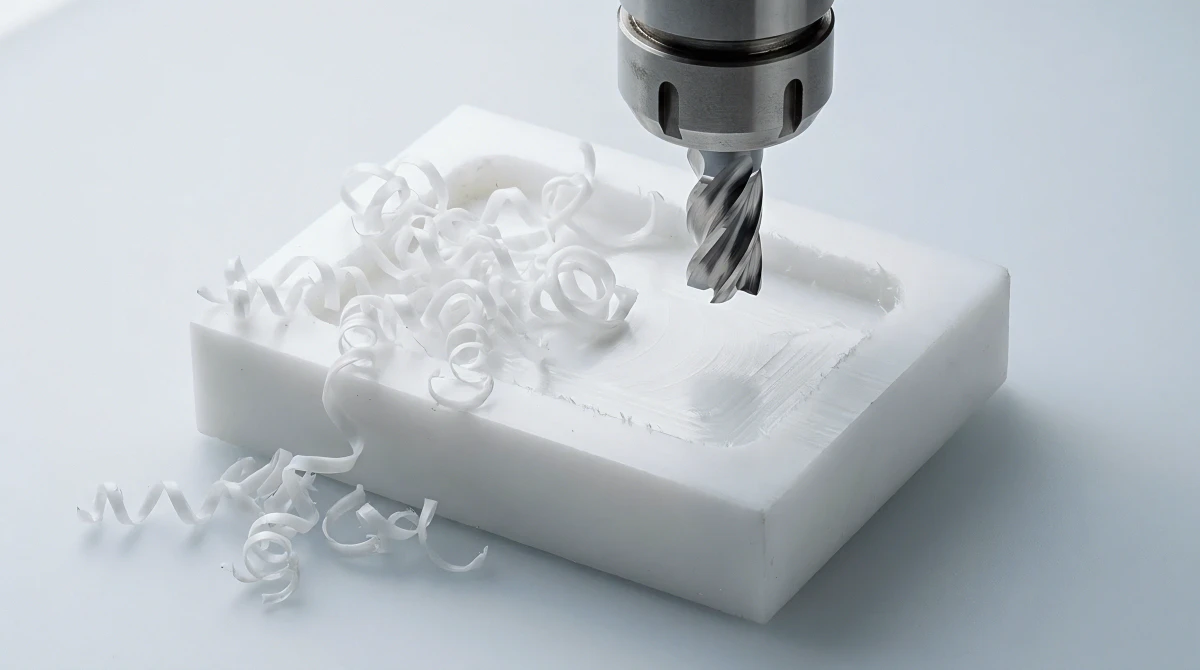
A continuous stream of stringy plastic wraps the chuck, the tool and the part. Quadrant and Mitsubishi recommend a compressed-air suction system that sends the swarf straight into a container. Mitsubishi adds that machines need a cavernous swarf area and no conveyor belts. Röhm reads a smooth, continuous chip as proof that the angle, feed and speed are right.Rod Holding
Mitsubishi’s tips name collets, fixed-pressure jaws on newer machines and sliding-head machines for small, long sections. Tubes are bored at one end and a blank is pressed in to carry the jaw force. Ensinger lists good machinability and high stiffness among the acetal homopolymer’s features.Surface Diagnosis
Mitsubishi’s chart treats a melted surface and a rough surface as opposite errors. A melted surface asks for a higher feed and a lower spindle speed. A rough surface asks for a lighter feed and a better nose radius. Burrs at a cut-off point call for a chamfer before parting.Time per Pass
Machine time is short. Take a 50 mm (2 in) acetal rod turned for 100 mm (3.9 in). At 300 m/min (984 ft/min) and 0.2 mm/rev (0.008 in/rev), one pass takes about 16 seconds. The calendar of a turned part sits in the rest, the oven and the measuring room.