Meaning
A burr is a raised ridge of material pushed past an edge instead of being cut off, a common fault on soft and tough plastics. On polyethylene and acetal it is the material that stretched, folded and let the tool slide past. Its removal, deburring, is a normal step for these stocks. A burr also changes what a gauge reads at the edge.Cause
Tangram lists burrs when the tool is dull as an acetal fault. For polyolefins it lists heavy burrs, and for UHMW-PE severe burrs. A burr has two sources: an edge not sharp enough to part the chain, and a cut so light that the tool rubs. Mitsubishi’s turning chart adds a missing chamfer at sharp corners and too little side clearance.Read More
Prevention
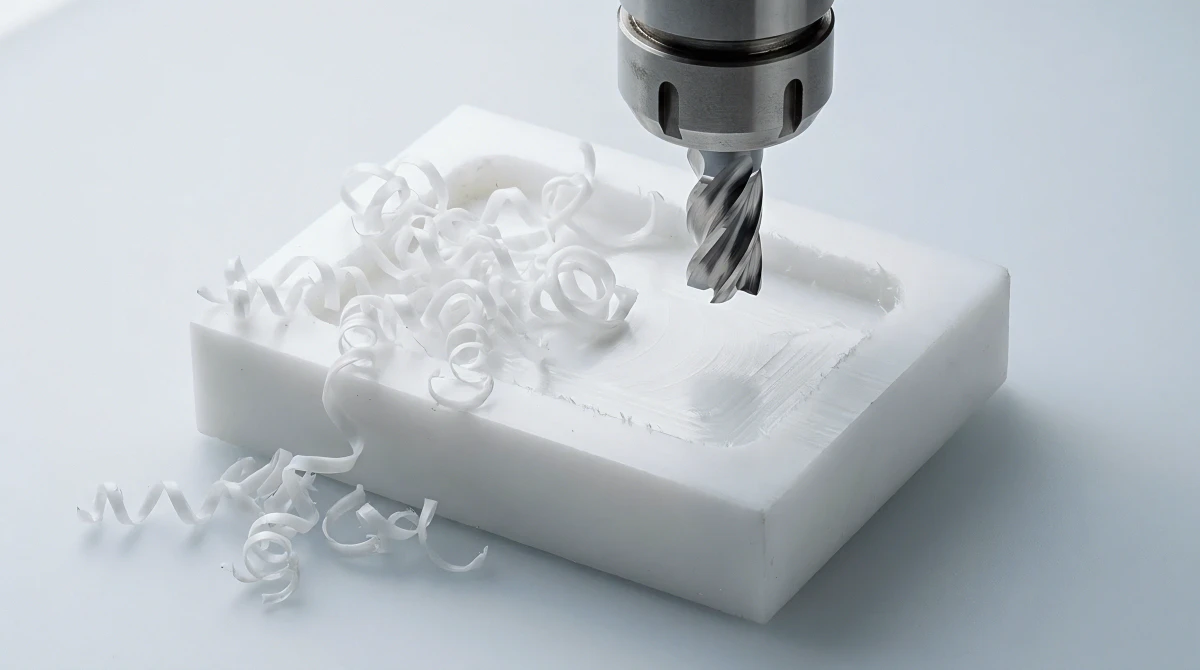
The sources ask for cutters with positive geometry, polished flutes and generous chip clearance, replaced before they dull. A chip load kept up turns a rub back into a cut. A chamfer applied before parting removes the burr at the cut-off point. Elongation explains the difference between grades. UHMW-PE stretches to 250 percent and HDPE to as much as 1,350 percent before breaking, so they do not snap clean.Deburring Method
Mitsubishi names sharp knives and rotating hooks as the most common deburring tools, and stresses sharpness above all. Countersink tools should not cut too deep or chatter. Hard plastics can be lightly abraded wet and dry, rotary stones work on some, and hot air serves complex profiles. Deburring is done part by part, so its time grows with the number of parts and edges.Effect on Measurement
Deburring comes before measurement. A burr left on a bore edge lifts a probe, so the hole reads small. A burr removed with a dull or heavy tool changes the edge that is measured, so the hole reads large.