Meaning
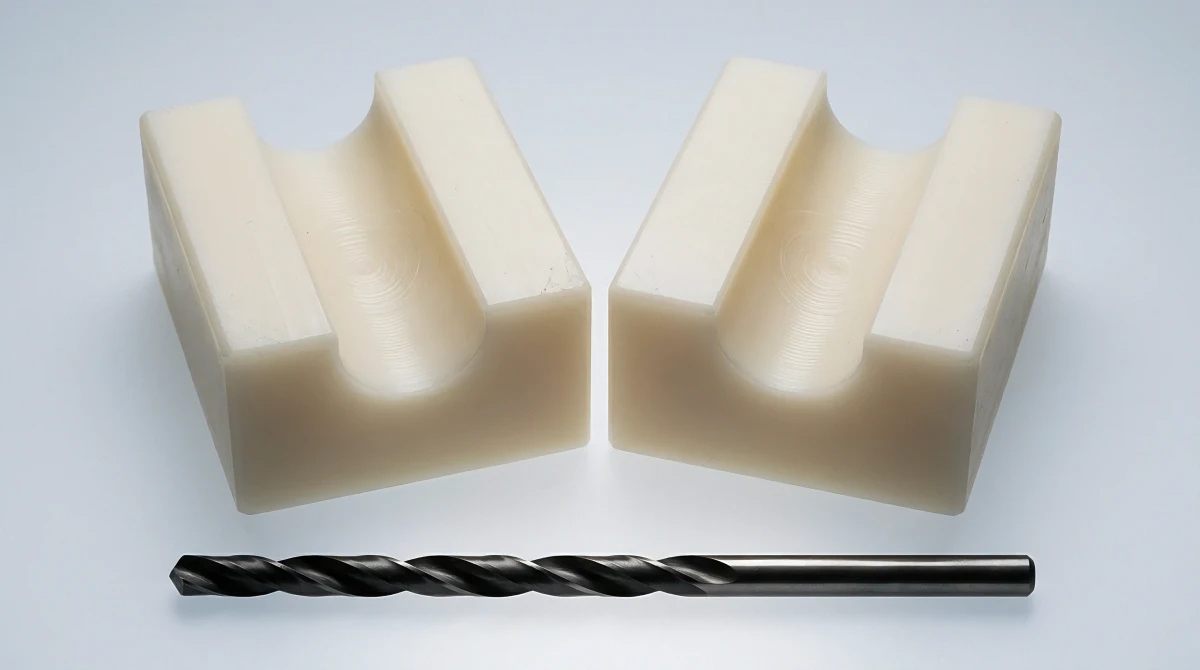
Pilot drill size is the cutting diameter of the drill that prepares a hole for tapping. In plastic it is checked on the material itself. Mitsubishi’s guide gives the reason in one line: most plastics close up after drilling, which can make taps bind. The nominal drill size from a metal tap chart is therefore only a starting point.Hole Closure
The hole wall relaxes elastically once the drill leaves. Mitsubishi’s summary states that plastics are much more elastic than metals. Tangram lists undersized holes as an acetal fault unless an adequate cut is given. For a tapped hole, Mitsubishi asks the machinist to check the actual cutting size of the drill on the grade in hand.Read More
Tapping Practice
Mitsubishi’s tips give four rules for threads. Use spiral taps rather than straight ones. Use rigid-tap cycles on CNC machines where possible. Check the pilot drill size, and use well-made taps. Single-point threading with a sharp insert and light final passes keeps the flanks clean.Insert Option
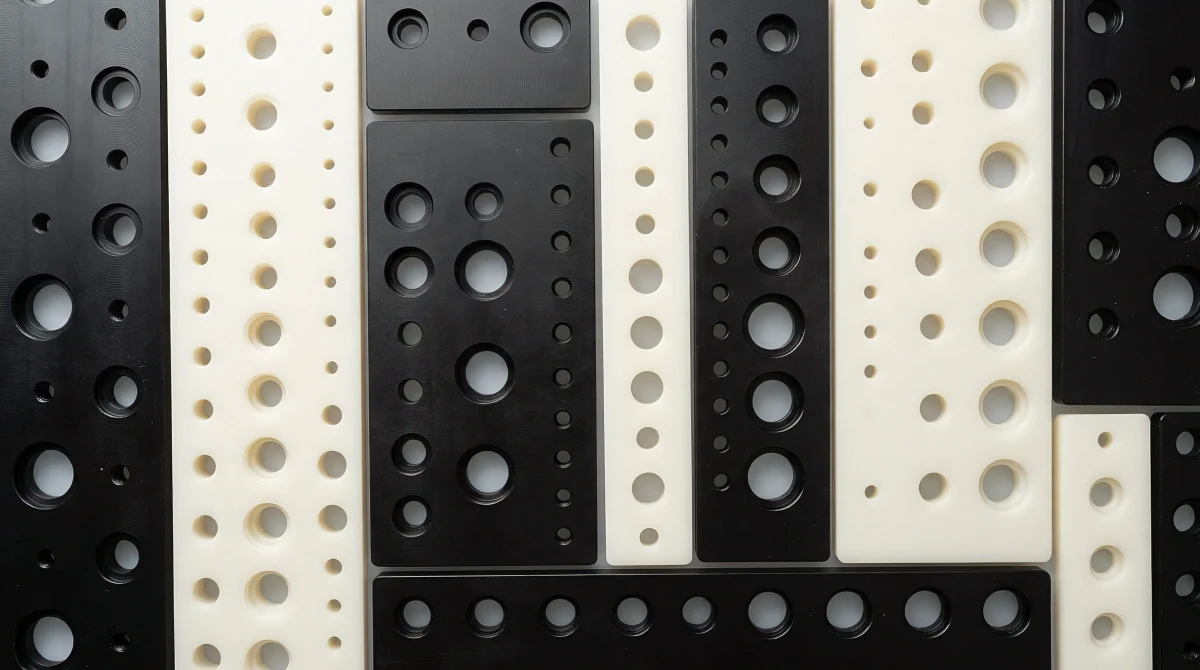
Mitsubishi says threaded inserts are not required for most of its engineering materials. They are recommended where there are strong vibrations or repeated clamping and unclamping. Self-tapping inserts are the most popular. The guide’s cautions are to pre-tap slotted inserts, check for closure after insertion and consider inserts with a cross hole. Quadrant adds that thread-forming screws create high stress around the hole and are not recommended in hard grades.Call-Out Line
A tapped hole on a plastic drawing gives the thread, the pilot size and whether an insert is wanted.