Nylon

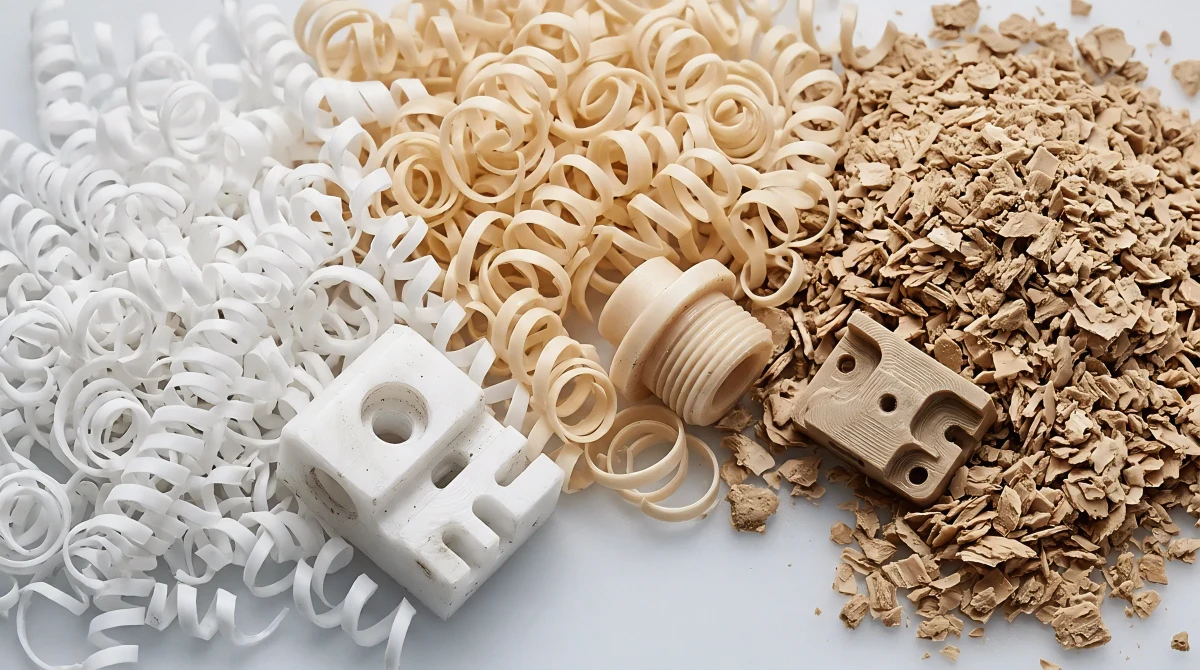
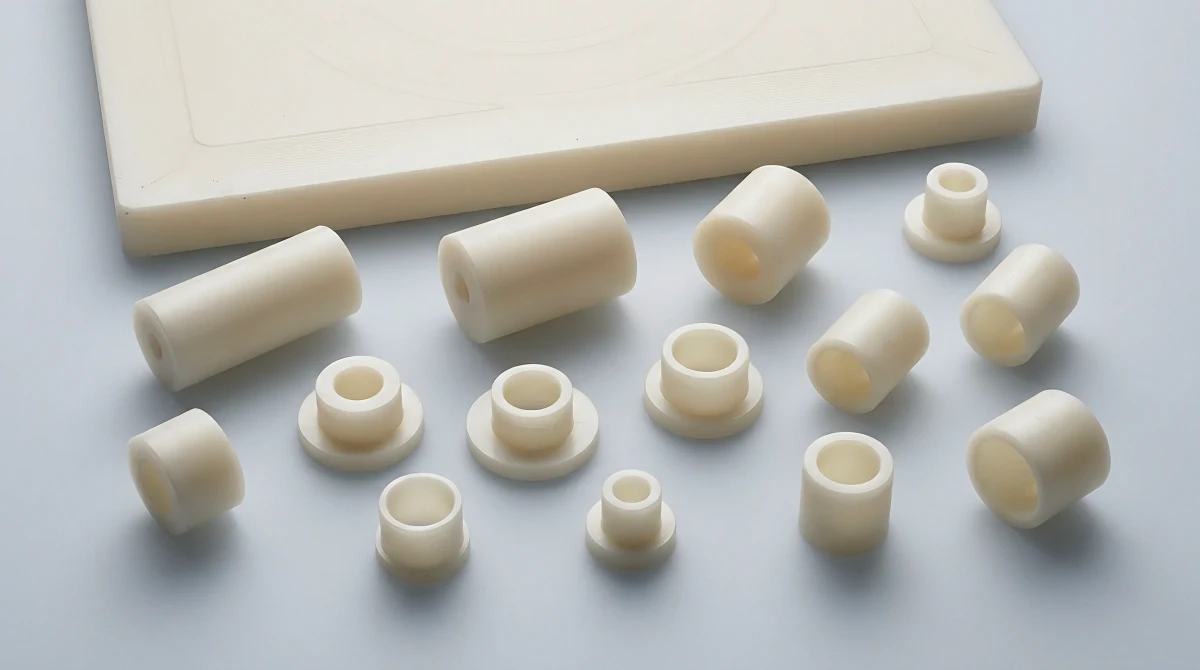
Nylon is the common name for polyamide (PA), an engineering plastic sold as extruded and cast stock that swells as it absorbs moisture.

Every Nylon article of the Plastic CNC Resources, newest first, each written from published standards, research and makers’ data.

Meaning

Nylon is the common name for polyamide (PA), an engineering plastic sold as extruded and cast stock that swells as it absorbs moisture. Quadrant names moisture swelling as mainly a nylon effect. That makes nylon the grade in these resources whose size depends most on where it has been stored. Its oven work also needs care, because hot air colors its surface.

Moisture Swell

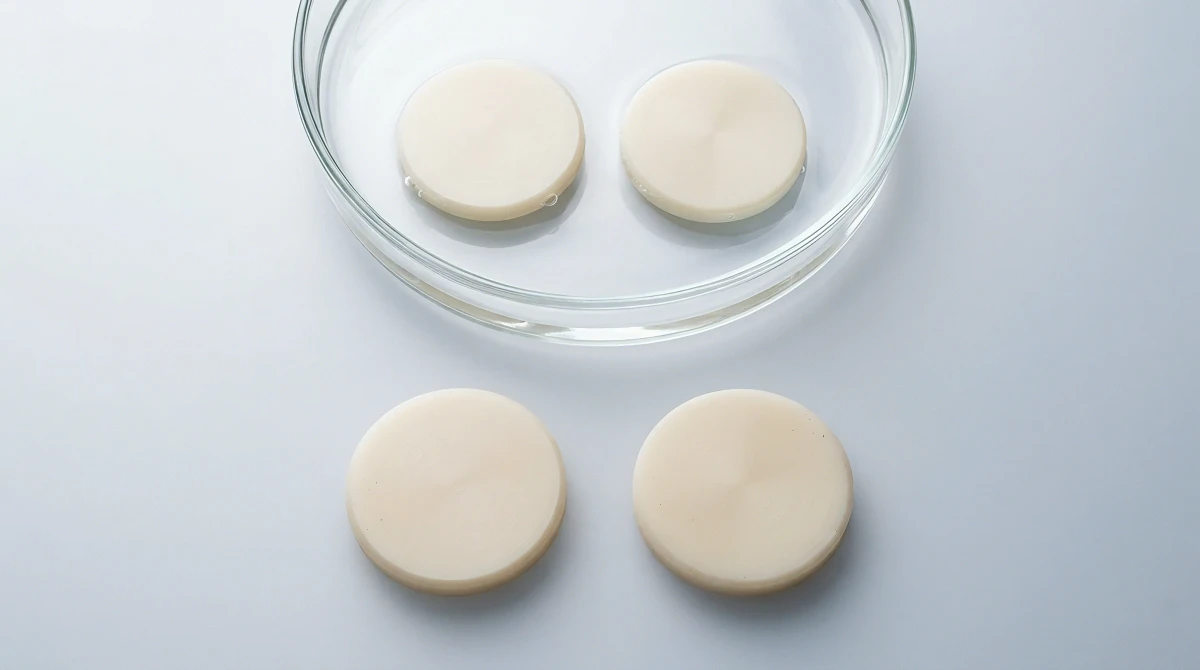
Quadrant states that high-tolerance nylon parts belong in sealed bags with desiccant until they are installed. A film of pure mineral grease or oil on all surfaces helps limit moisture uptake. The swelling is reversible. A swollen part dries back in a vacuum oven at 60 to 70 °C (140 to 158 °F) until its weight is constant. The minimum is 24 hours per 3 mm (0.12 in) of thickness, so a 10 mm (0.39 in) part needs at least 80 hours.
Read More

Wet-Stock Risk

A nylon part machined from wet stock and then dried can end up smaller than drawn. A careful supplier dries or conditions the stock first or accounts for the shift. A 2018 study by Mustafa Bozdemir on end milling cast polyamide PA6G used humid and dry plates as an input. It describes the material as vulnerable to humidity up to 7 percent.

Oven Work

Mitsubishi’s 2026 guide holds unfilled polyamide at 160 °C (320 °F) when annealing, and Quadrant’s 2014 edition held it at 150 °C (302 °F). Polyamide 66 with 30 percent glass holds at 170 °C (338 °F) in both. Mitsubishi’s guide holds unfilled nylon at 160 °C (320 °F). Quadrant warns that a natural-colored part annealed in an air oven above 100 °C (212 °F) forms an oxidized, colored skin. That effect is strongest in nylon, and the finishing pass usually removes it.

Large-Rod Method

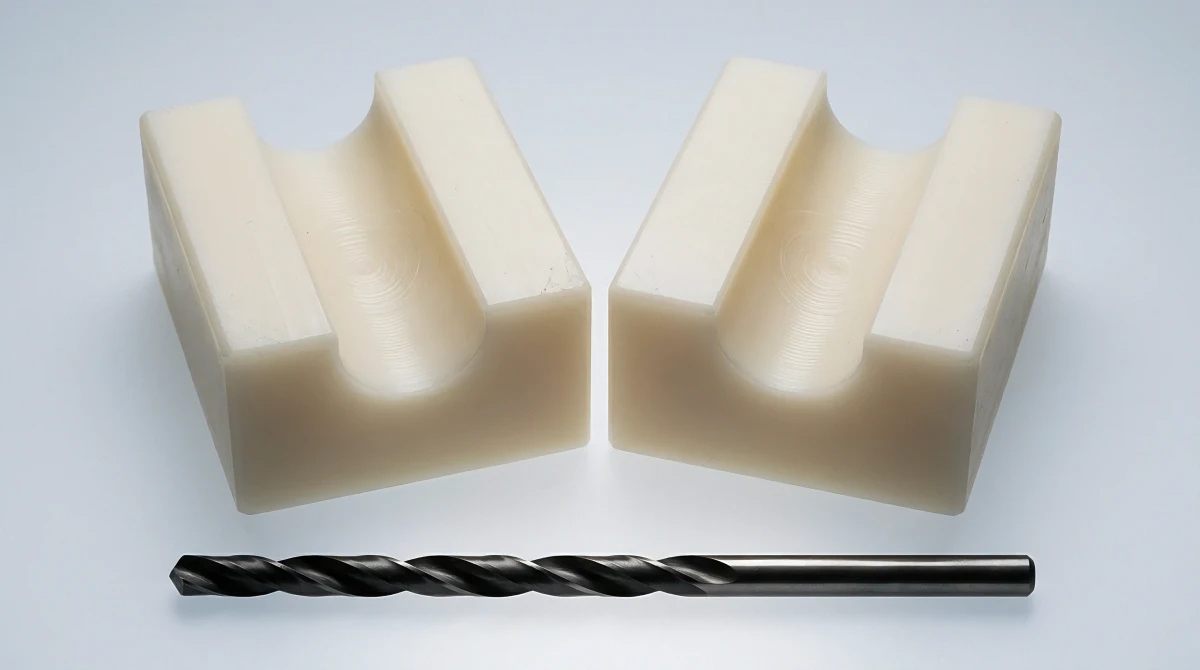
Quadrant advises against high-speed twist drills in polyamide rods over 200 mm (7.9 in) in diameter. An insert drill or a flat boring tool on a lathe takes the bore instead.

Speeds and Feeds for Machining Acetal, Nylon and PEEK

Acetal, nylon and PEEK share wide published cutting windows, and the right point inside each depends on making a chip that carries heat out of the part.

Speeds and Feeds for Acetal, Nylon and PEEK in One TableTable 1 sets the published cutting data for the three materials side by side, from MCAM's 2026 guide and from Tangram Technology, a UK plastics engineering consultancy that publishes indicative values. MCAM groups unfilled PEEK with PET-P and PAI, and filled PEEK with the other reinforced grades; Tangram does not list PEEK.

Drilling Deep Holes in Plastic Without Melting or Cracking

Holes deeper than two diameters trap heat in plastic, so drill grind, peck cycle, coolant choice and cool-down decide whether the part cracks or holds its size.

How to Drill a Deep Hole in Plastic Without Melting or CrackingTreat any hole deeper than two diameters as a cooling problem first and a cutting problem second. Both Mitsubishi Chemical Advanced Materials (MCAM) and Ensinger name the same threshold: heat builds very easily once the depth passes twice the diameter.

Surface Finish of Machined Plastics by Material and Tool

Measured roughness on machined plastics follows feed first, then tool edge and material, and a finish call-out needs its parameter, surface, direction and part condition.

What Surface Finish Machined Plastics Reach and What Sets ItTwo open studies give a measured range for ordinary turning and milling of tough engineering plastics. Turning HDPE and PA6 with a carbide insert produced average roughness (Ra) from about 2.1 µm (83 µin) to about 11 µm (439 µin) across the tested conditions.

Flatness and Warp of Thin Machined Plastic Plates

Thin plastic plates bow when stress, heat, clamping or moisture act on one face more than the other, so flatness is planned through stock, sequence, rest and measurement.

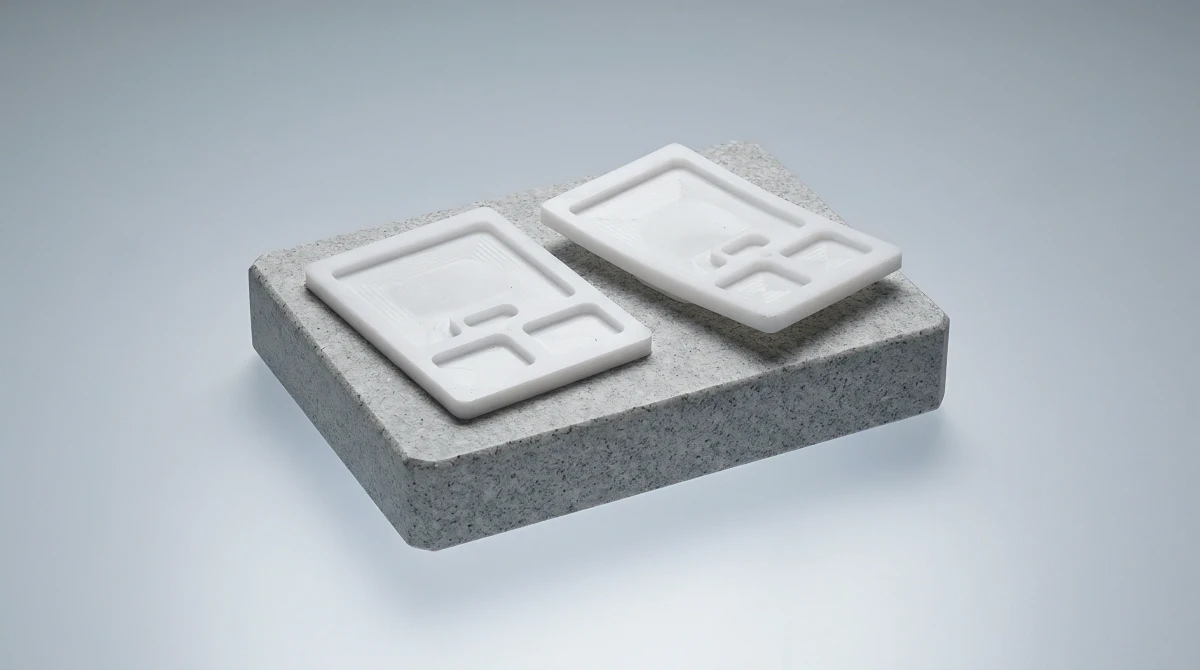
Why Thin Machined Plastic Plates Lose FlatnessA thin plate loses flatness when the stresses on its two faces stop balancing. Mitsubishi Chemical Advanced Materials (MCAM) explains the mechanism in its machining guide: extrusion, molding and machining leave residual stresses inside a thermoplastic, and when material is removed or the part meets elevated temperatures, those stresses redistribute and cause warping or dimensional change.

Shore D and Rockwell Hardness on Plastic Stock Data Sheets

Shore D and Rockwell values on plastic stock sheets rank surface hardness under named methods, cannot be converted into each other, and bind a supplier only when agreed.

What Shore D and Rockwell Numbers Mean on a Plastic Stock Data SheetBoth numbers rank how strongly a plastic resists a hard indenter pressed into its surface at room temperature. Neither is a strength, a wear rating or a design value.

Cast and Extruded Nylon PA6 Stock for Machined Parts

Cast and extruded PA6 share a name but not their stress, crystallinity, chips or moisture behavior, and a machined nylon part keeps changing size after the cut.

Cast or Extruded PA6 for a Machined PartCast PA6 is usually the better machining stock when the part is large, flat, stiff or close-toleranced. Extruded PA6 is the tougher, more elastic choice for smaller parts where impact strength and elongation matter more than the last hundredth of a millimeter.

How Long Resting, Annealing and Drying Add to Machined Plastic Parts

In a machined plastic order the cutting takes minutes, while resting, drying and heat treatment take days, so the drawing sets the lead time.

Where the Calendar Goes in a Machined Plastic OrderMost of the elapsed time in a machined plastic order is spent on stock preparation, resting, heat treatment, drying and measurement at a controlled temperature, and the cutting is a small fraction. When a part needs none of those steps, it goes from blank to finished in the machine time plus setup and deburring.

Inspecting a Batch of Machined Plastic Parts Before It Ships

Inspecting machined plastic means stating the temperature, the probe force and the sample size, because a plastic part changes with all three.

How to Inspect a Batch of Machined Plastic PartsInspect the batch at a stated temperature, with a low-force or non-contact method for soft or thin parts, on a sample whose size is chosen in advance, and record the conditions with the results. Those four elements separate a measurement that can be repeated from one that cannot.

Annealing Machined Plastic Parts Between Roughing and Finishing

Annealing between roughing and finishing trades oven days for flat, stable parts, and it pays only when stress, shape or tolerance demand it.

When a Machined Plastic Part Needs AnnealingA machined plastic part needs an intermediate anneal when it has tight tolerances, an asymmetric shape, or a large share of its blank removed, and when it does not need one the stock maker has already done the work. Ensinger states the starting condition: its semi-finished products are always annealed after production, which is why a first cut can start without a stress-relief step.

Request a Plastic CNC Quote

Send the 2D drawing and the 3D file, with the quantity and the stage of the project. An engineer replies within 1 working day.

The quote form, the mutual NDA and the private folder for your files are on Protolis Atelier, with Plastic CNC chosen.

Request a Quote