Meaning
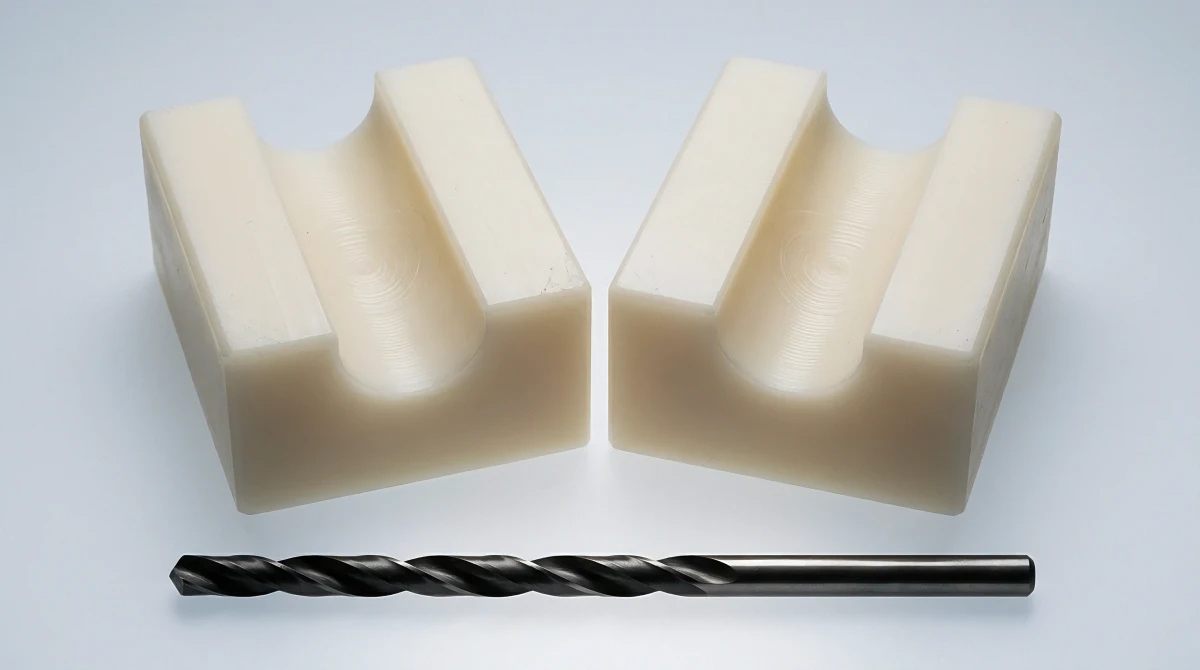
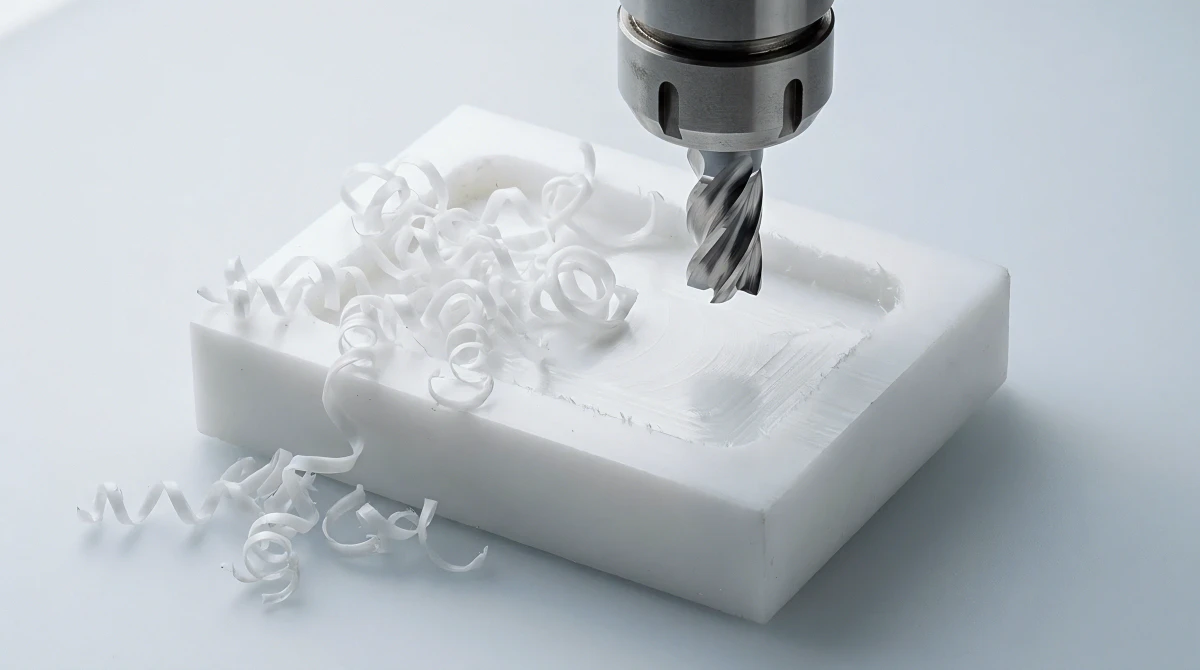
A twist drill is the standard fluted drill used for most holes in plastic, ground with a point, rake and relief suited to the polymer. Mitsubishi recommends HSS twist drills with peck drilling for holes of 0.5 to 25 mm (0.02 to 1 in). For larger holes and some grades it is replaced by other tools.Point Geometry
For most families Mitsubishi prints a top angle of 90 to 120 degrees. Relief is 5 to 10 degrees and rake 3 to 5 degrees. On small holes it prefers a slow spiral, low-helix drill, which clears swarf better. From 25 mm (1 in) up, the web is thinned to cut friction and heat. Tangram adds relief grinding to reduce rubbing.Read More
Acrylic Grind
Röhm states that twist drills for metal cannot be used on PLEXIGLAS as ground. The point angle is reduced from 120 degrees to 60 to 90 degrees. The rake is ground down to 4 to 0 degrees, and the clearance kept at least 3 degrees. That grind prevents chipping on the exit side of the hole.Large-Hole Method
A large hole is opened in steps. Mitsubishi’s example makes a 50 mm (2 in) bore by drilling 12 mm (0.47 in), then 25 mm (0.98 in), then boring. Quadrant advises against high-speed twist drills in large rods altogether. The limit is over 50 mm (2 in) for PBI, PAI and filled PEEK and PPS. It is over 100 mm (3.9 in) for PET-P and unfilled PEEK. Polyamide rods over 200 mm (7.9 in) also take an insert drill or flat boring tool instead.Fault Pattern
Mitsubishi’s table shows how the drill’s own grind moves the hole. A drill ground off-center or with a web too thick cuts oversize. A dull drill or a point angle too small cuts undersize. A feed too heavy appears in four of the six fault rows.