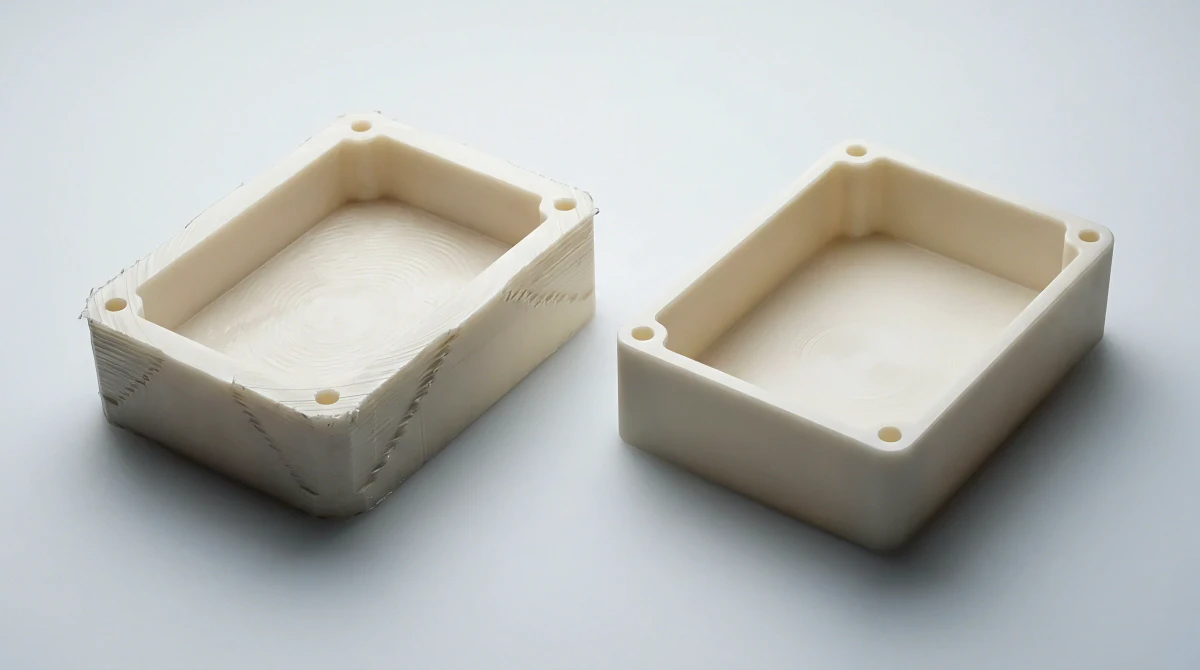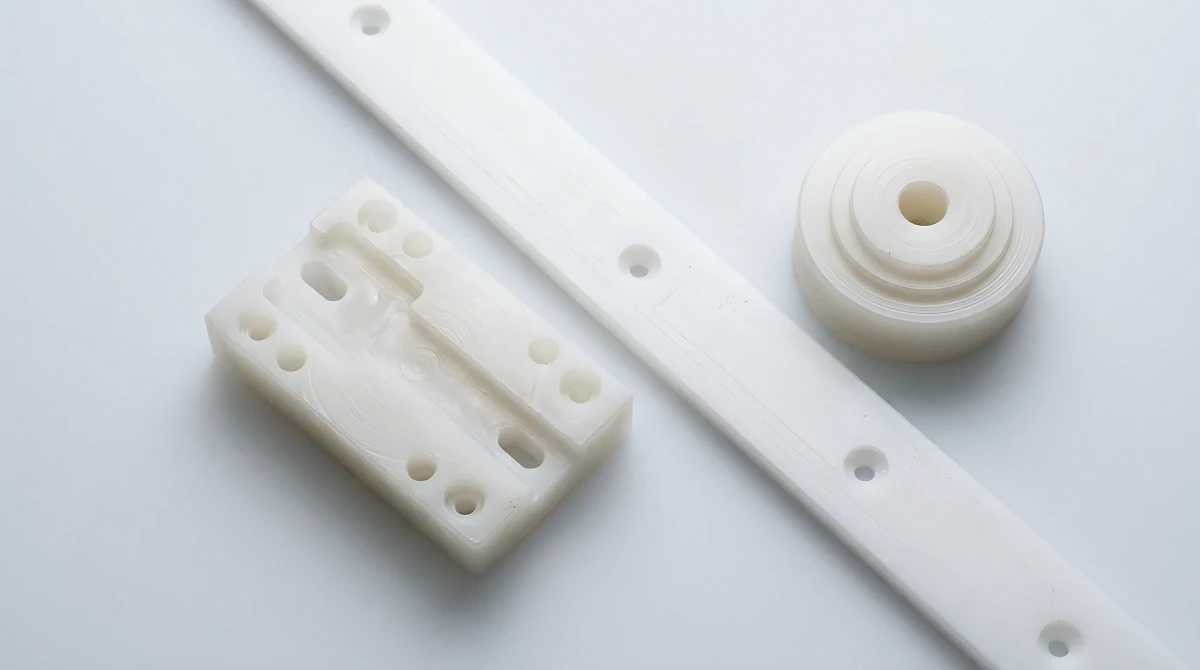
Roughing and Finishing

Roughing and finishing is the two-stage cut that removes most material first and takes the final size later with a light pass.

Every Roughing and Finishing article of the Plastic CNC Resources, newest first, each written from published standards, research and makers’ data.

Meaning

Roughing and finishing is the two-stage cut that removes most material first and takes the final size later with a light pass. A rest or anneal sits between. For plastic the pause between the two matters as much as the cuts. It lets the part release the stress that roughing exposed before the final size is set.

Step Sequence

Mitsubishi’s turning tips rough out large sections and leave them for 24 hours to improve tolerances. Its annealing tips describe rough machining, annealing and finish machining with a very light cut. The finish machining of critical dimensions comes after the anneal. For post-cured PAI, the finishing cut removes no more than 0.5 mm (0.020 in) of the cured layer.
Read More

Stock Allowance

Roughing leaves stock for the finish. Quadrant advises at least 3 percent oversize on diameters and lengths of circular parts that will be annealed. It asks for a trial on one or a few parts to learn how far the treatment moves them. Ensinger says the roughing leaves an approximate safety margin, because annealing can shrink the part. Mitsubishi adds that most diameters grow after cutting, so the finish aims at the lowest dimension.

Batch Timing

Roughing and finishing are paid per part, while the rest between them is paid per batch. The roughed parts of a run rest together and are finished together. The rest therefore adds the same hours to a run of 40 parts and to one of 440.

Finishing Pass

The second clamp takes the roughed part in its relaxed shape. A part pulled flat for finishing springs back when released, so the pass is light. Tangram’s warning applies to both stages: slow and gentle is not automatically safer, because a light cut that rubs makes heat.

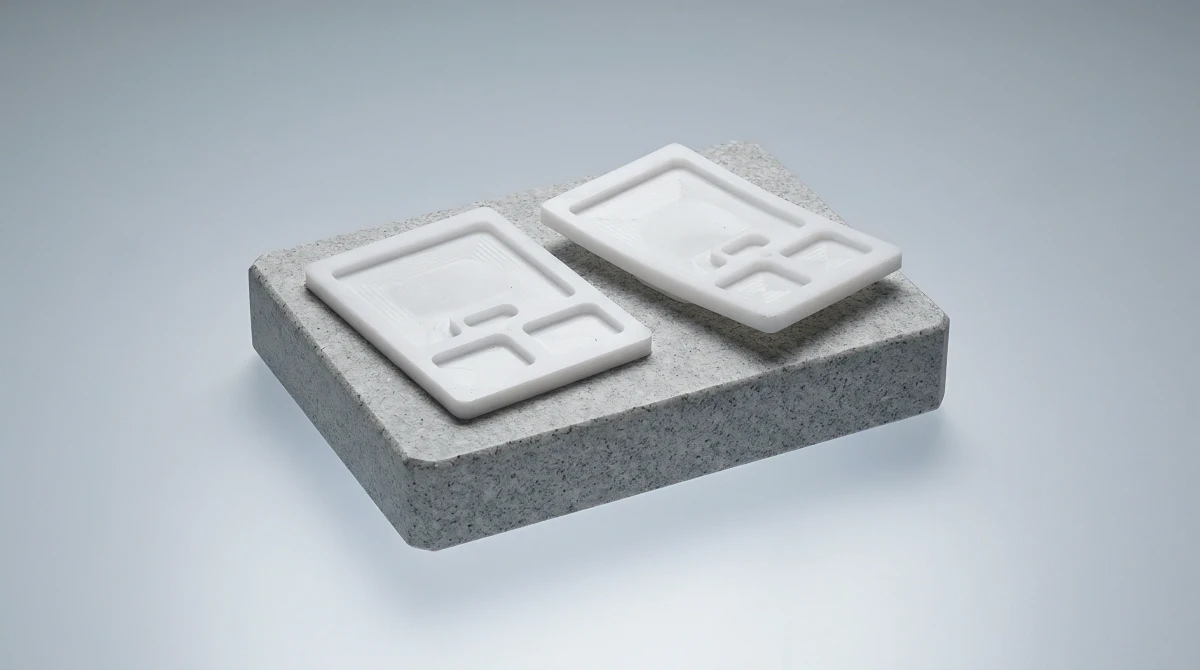
Flatness and Warp of Thin Machined Plastic Plates

Thin plastic plates bow when stress, heat, clamping or moisture act on one face more than the other, so flatness is planned through stock, sequence, rest and measurement.

Why Thin Machined Plastic Plates Lose FlatnessA thin plate loses flatness when the stresses on its two faces stop balancing. Mitsubishi Chemical Advanced Materials (MCAM) explains the mechanism in its machining guide: extrusion, molding and machining leave residual stresses inside a thermoplastic, and when material is removed or the part meets elevated temperatures, those stresses redistribute and cause warping or dimensional change.
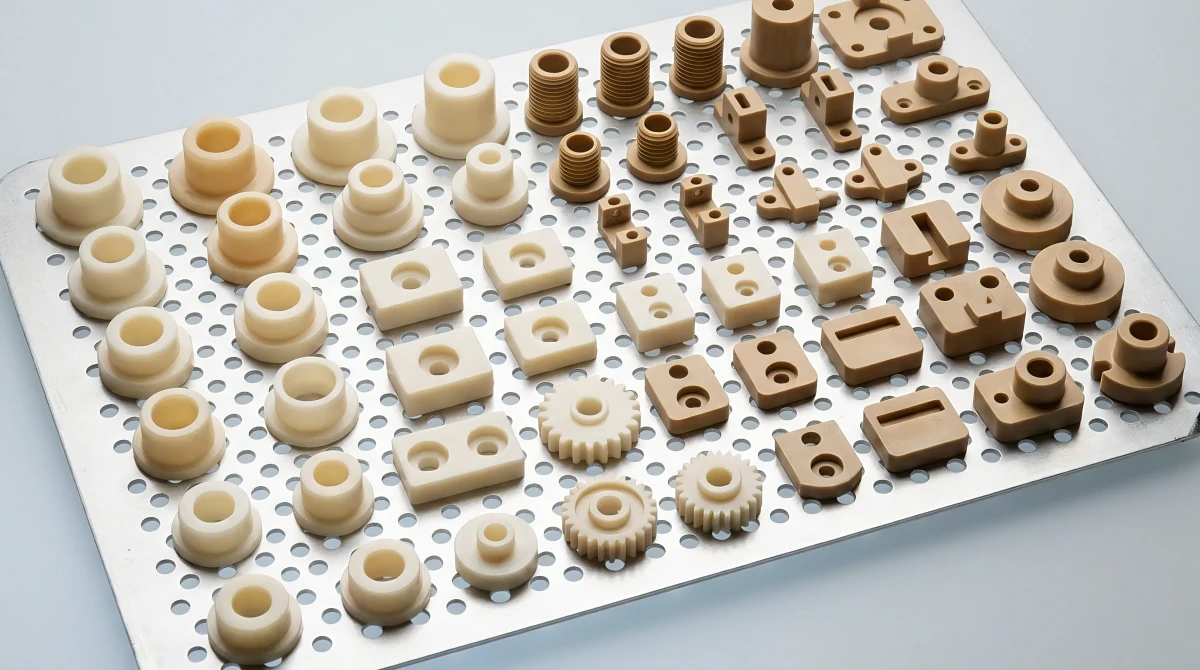
How Long Resting, Annealing and Drying Add to Machined Plastic Parts

In a machined plastic order the cutting takes minutes, while resting, drying and heat treatment take days, so the drawing sets the lead time.

Where the Calendar Goes in a Machined Plastic OrderMost of the elapsed time in a machined plastic order is spent on stock preparation, resting, heat treatment, drying and measurement at a controlled temperature, and the cutting is a small fraction. When a part needs none of those steps, it goes from blank to finished in the machine time plus setup and deburring.

Holding Plastic Parts for CNC Machining Without Bending Them

Plastic parts distort under clamps that metal parts shrug off, so the hold, the support and the symmetry of the cut set the final size.

How to Hold a Plastic Part on a CNC MachineHold it on as much surface as the geometry allows, with the lowest force that keeps it from moving, and with every thin wall backed by something solid. That sentence compresses three recommendations that recur across the stock-shape makers' guides: light clamping, support under the cut, and distribution of the force by vacuum or soft jaws instead of point contact.

Annealing Machined Plastic Parts Between Roughing and Finishing

Annealing between roughing and finishing trades oven days for flat, stable parts, and it pays only when stress, shape or tolerance demand it.

When a Machined Plastic Part Needs AnnealingA machined plastic part needs an intermediate anneal when it has tight tolerances, an asymmetric shape, or a large share of its blank removed, and when it does not need one the stock maker has already done the work. Ensinger states the starting condition: its semi-finished products are always annealed after production, which is why a first cut can start without a stress-relief step.

UHMW-PE and HDPE Stock for CNC Milling and Turning

UHMW-PE wears longest and HDPE holds shape better, and both need sharp tools, chip control and a stated measurement temperature to hold size.

UHMW-PE and HDPE Differences for Machined PartsBoth are polyethylene, and the difference starts with chain length. Mitsubishi describes its TIVAR 1000 Virgin UHMW-PE as setting the standard for ultra high molecular weight polyethylene shapes, with a combination of wear and corrosion resistance, a low-friction surface and excellent impact strength.

Request a Plastic CNC Quote

Send the 2D drawing and the 3D file, with the quantity and the stage of the project. An engineer replies within 1 working day.

The quote form, the mutual NDA and the private folder for your files are on Protolis Atelier, with Plastic CNC chosen.

Request a Quote