Meaning
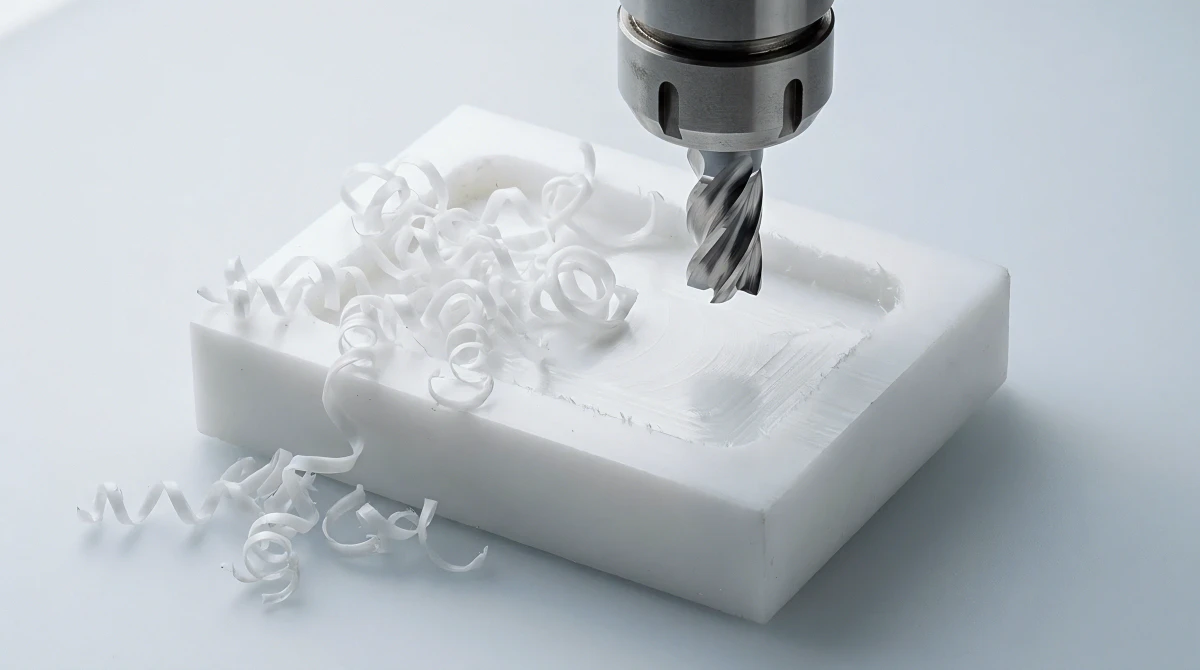
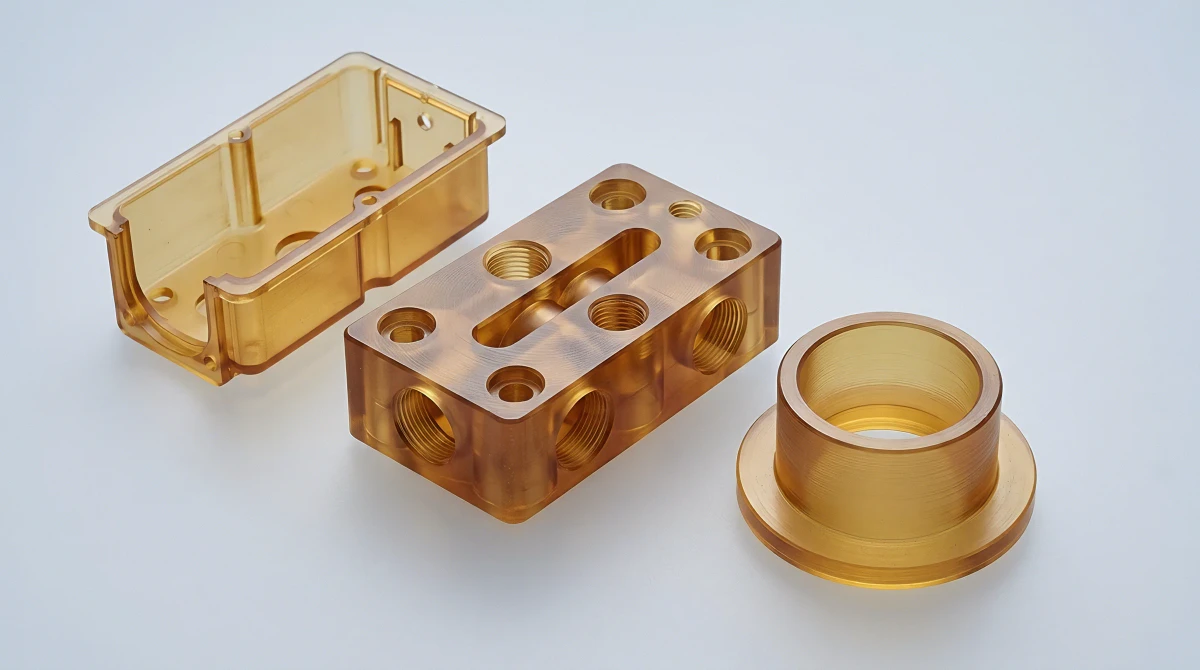
An amorphous plastic is a thermoplastic without a crystalline structure, such as PEI, polycarbonate, PSU, PPSU or acrylic. It has no crystalline melting point. In machining it behaves differently from semicrystalline stock such as acetal or polyethylene. It shrinks less after cutting, but it reacts more to stress and to the fluids that meet it.Member Grades
The stock-shape guides from Mitsubishi and Quadrant name polycarbonate, PSU, PPSU and PEI together whenever coolant is discussed. Röhm’s acrylic, PLEXIGLAS, belongs to the same family and shows the same weakness as crazing.Read More
Post-Shrinkage
Ensinger gives post-shrinkage of about 0.3 to 0.7 percent for amorphous thermoplastics. Semicrystalline ones reach about 1.0 to 2.5 percent. Both ranges come from the same Ensinger answer on dimensional stability.Fluid Sensitivity
Tangram Technology places amorphous thermoplastics among the materials more sensitive to stress and to cooling fluids. Mitsubishi states that mineral-oil cutting fluids may contribute to stress cracking of PC, PPSU, PEI and PSU. Both guides recommend pure water or compressed air for these grades. If a coolant cannot be avoided, the part is washed with isopropyl alcohol and rinsed with pure water right away.Annealing Need
Polycarbonate, polysulfone and PEI are the amorphous grades most often annealed after machining, to limit stress crazing. It adds that annealing finished parts becomes more important as machining volume increases. Hold temperatures follow the polymer. Röhm anneals cast acrylic at 80 °C (176 °F), well below the engineering grades. Mitsubishi prints 130 °C (266 °F) for polycarbonate and 200 °C (392 °F) for PEI, PPSU and the high-temperature group.