Meaning
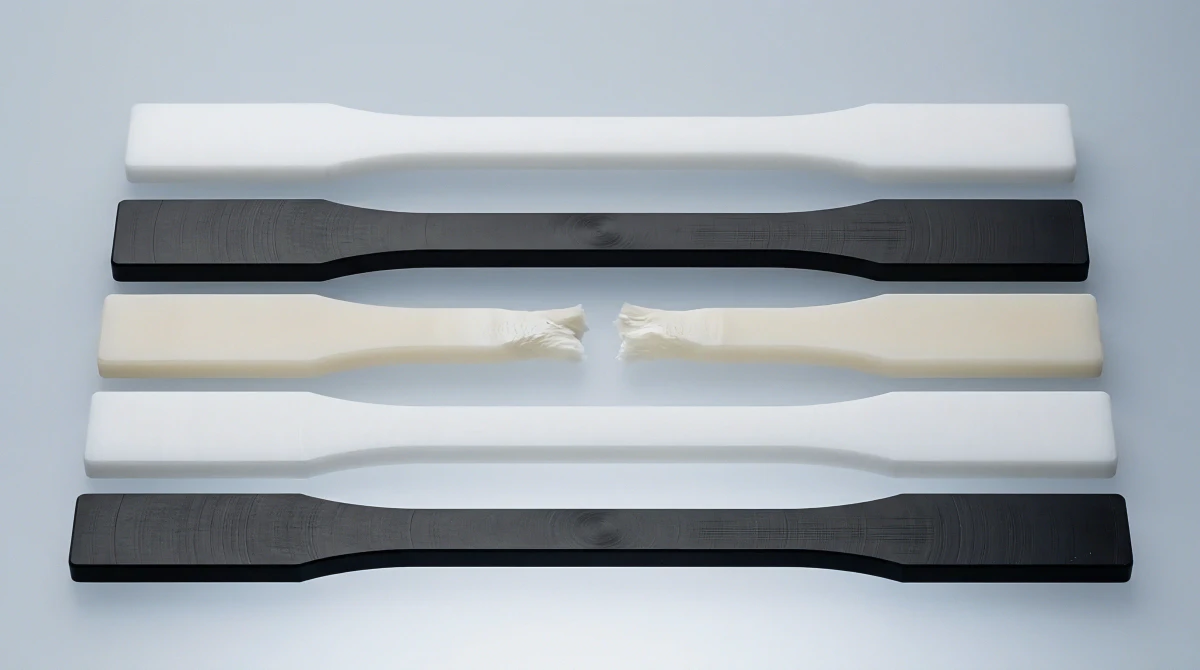
ASTM D638 is the standard test method for the tensile properties of plastics, pulling dumbbell-shaped specimens under defined conditions. It is the method behind the tensile strength, modulus and elongation lines on most stock sheets. On astm.org the 2022 edition is listed as active. SI units are the standard, with inch units for information only.Scope
D638 covers unreinforced and reinforced plastics under defined pretreatment, temperature, humidity and testing machine speed. It applies to material up to 14 mm (0.55 in) thick, with thicker stock machined down to make the specimen. Thin sheeting under 1.0 mm (0.04 in), including film, belongs to ASTM D882. D638 and ISO 527-1 address the same subject but differ in technical content.Read More
Stated Caveat
The standard’s Note 2 says the constant-rate-of-crosshead-movement method leaves much to be desired from a theoretical standpoint. The rate of crosshead movement and the strain rate between gage marks may differ widely. The specified speeds disguise effects characteristic of plastics. Variations in thickness change the surface-to-volume ratio and may change results, so comparable results need equal thickness. The standard calls its data useful in engineering design, with those precautions.Sheet Citation
The acetal, UHMW-PE and PEI sheets in these resources cite D638 for strength, modulus and elongation. Few print the specimen type or the speed. Mitsubishi’s note to its tensile line says a printed tensile strength may be either the strength at yield or the strength at break.Call-Out Form
A complete tensile line reads: tensile stress at yield, ASTM D638-22, Type I specimen, 5 mm/min (0.2 in/min), 23 °C (73 °F). It closes with typical value from the grade’s maker sheet. Each clause answers one field a supplier can match or say is missing.