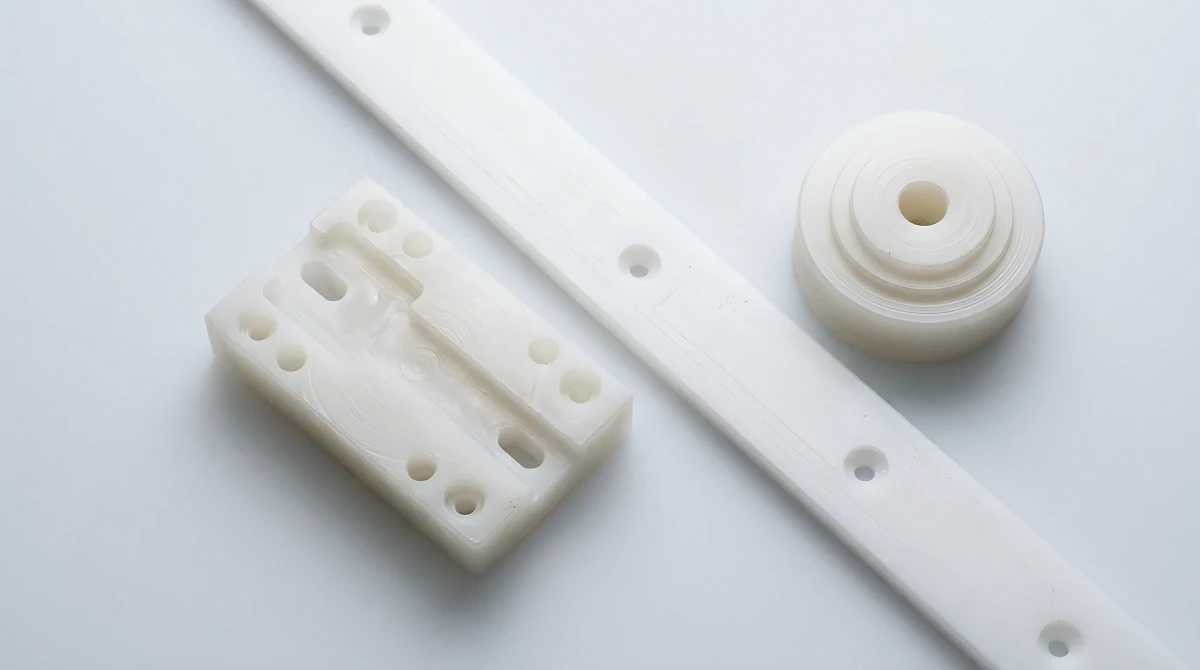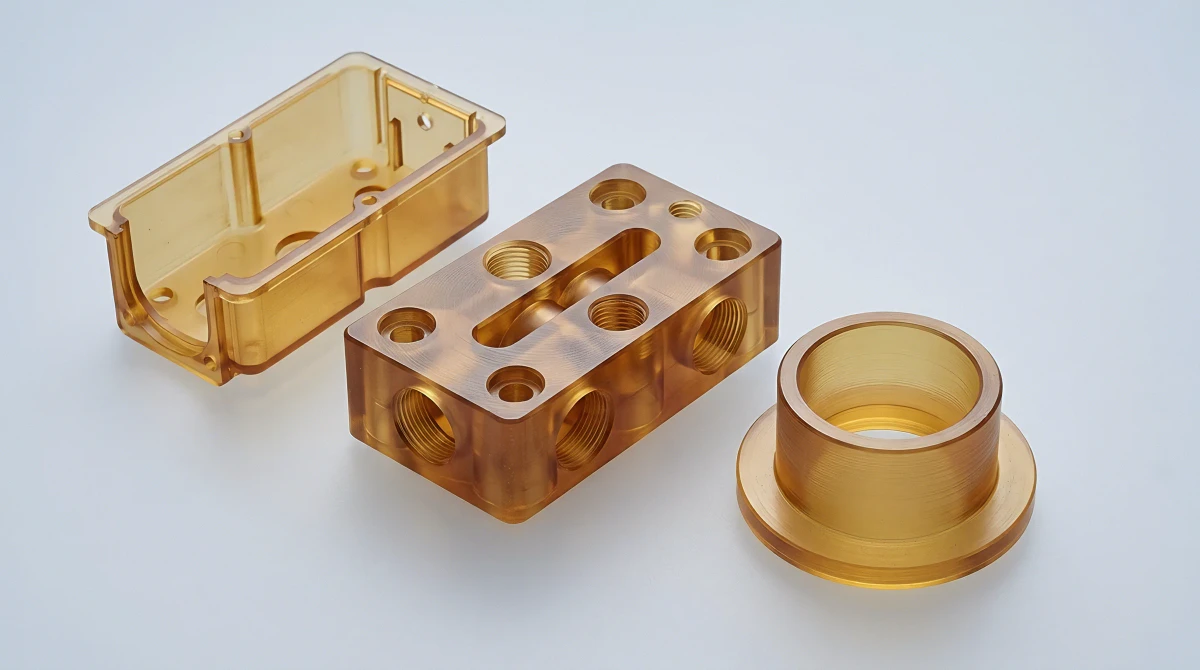
Elongation at Break

Elongation at break is how far a tensile specimen stretches, as a percentage of its length, before it fails.

Every Elongation at Break article of the Plastic CNC Resources, newest first, each written from published standards, research and makers’ data.

Meaning

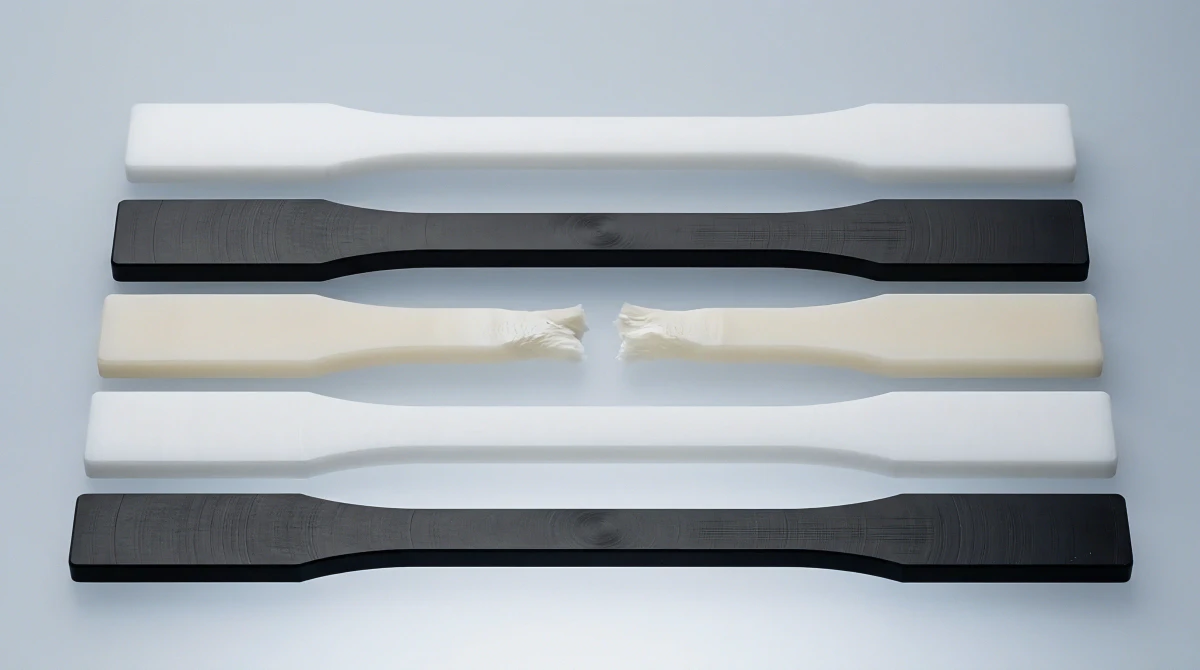
Elongation at break is how far a tensile specimen stretches, as a percentage of its length, before it fails. Sheets print it beside strength under ASTM D638. A high figure means the bar changed shape long before it broke. For a part that has to keep its shape, the yield side of the curve is the one that counts.

Published Values

TIVAR 1000 UHMW-PE lists 250 percent at break and 15 percent at yield. Spartech’s HDPE sheet lists 800 percent at break, and Mitsubishi’s TIVAR 1000 sheet 300 percent by ASTM D638. Ensinger’s unfilled PEI lists 40 percent at break. The acetal sheets give 25 to 30 percent.
Read More

Interpretation

A bar that stretches to several times its length has yielded long before it breaks. The UHMW-PE sheet shows the trap. Its break stress of 40.0 MPa (5,800 psi) is nearly twice its yield of 21.0 MPa (3,050 psi). A designer who reads elongation and break together sees how far a part moves before it fails, and how much earlier it stops springing back.

Machining Effect

Elongation also predicts how a stock cuts. The UHMW-PE article opens with the point. Material that stretches to 250 or 1,350 percent does not snap clean under an edge. It stretches, folds over and lets the tool slide past, which leaves burrs the length of the part.

Fiber Effect

Glass takes elongation away. Ensinger lists 3 percent at break for its 30 percent glass PEI, against 40 percent unfilled. That is what the fiber costs in toughness for the stiffness it adds.

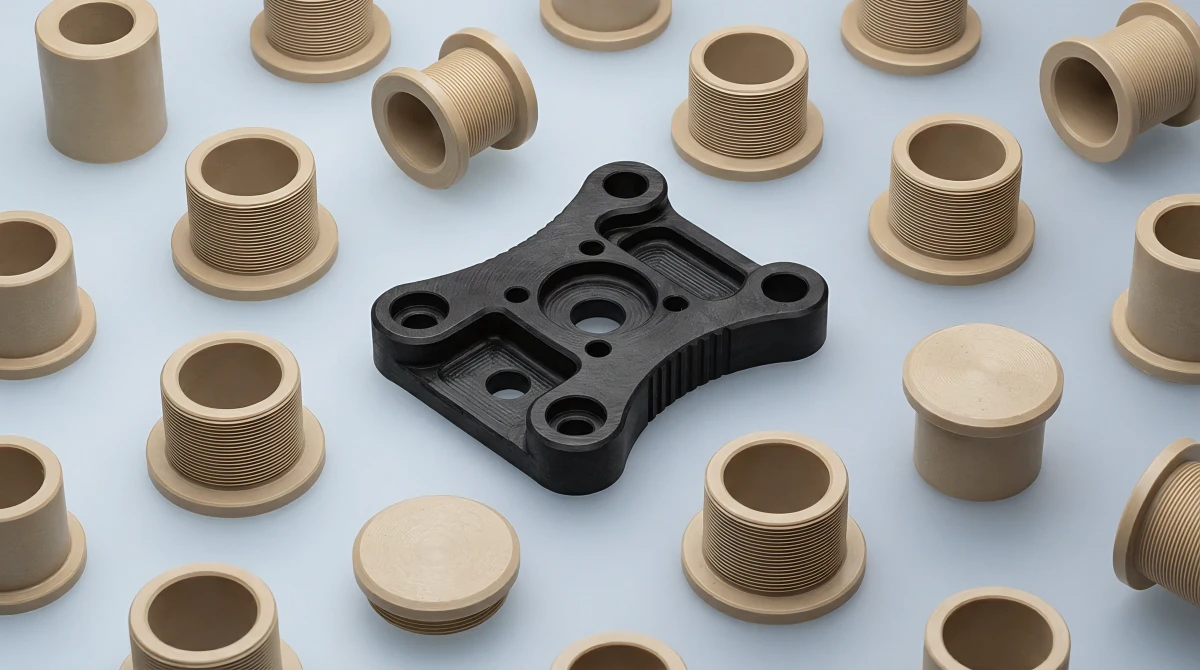
Machining PEEK Unfilled and Carbon-Filled Stock

Unfilled and carbon-filled PEEK share a polymer but differ in stiffness, conductivity, tooling, cutting data and tolerance, so the grade belongs on the drawing.

How Unfilled and Carbon-Filled PEEK Stock Differ for Machined PartsUnfilled PEEK machines like a hard, stiff thermoplastic: short chips, little burr, high feed rates and fine finishes. Carbon-filled PEEK machines like a composite: abrasive to tools, sensitive to fiber direction, and best cut with carbide or diamond at lower speeds.
Cast and Extruded Nylon PA6 Stock for Machined Parts

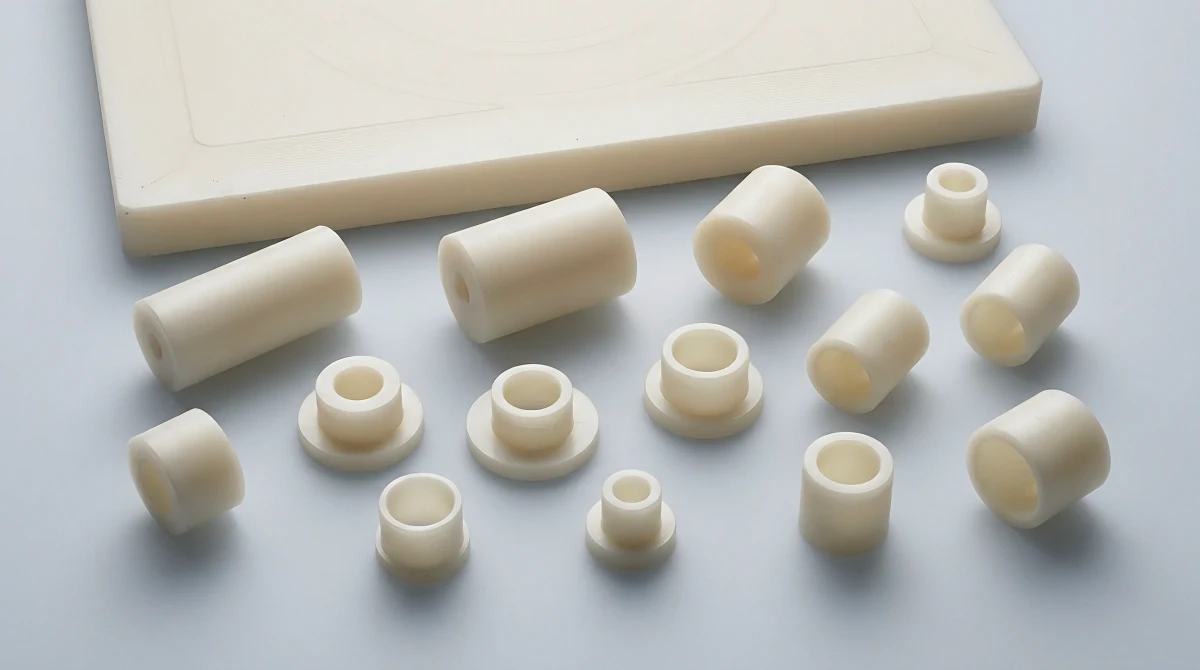
Cast and extruded PA6 share a name but not their stress, crystallinity, chips or moisture behavior, and a machined nylon part keeps changing size after the cut.

Cast or Extruded PA6 for a Machined PartCast PA6 is usually the better machining stock when the part is large, flat, stiff or close-toleranced. Extruded PA6 is the tougher, more elastic choice for smaller parts where impact strength and elongation matter more than the last hundredth of a millimeter.

ASTM D638 Tensile Strength on Plastic Stock Data Sheets

A tensile figure on a data sheet belongs to one bar, one speed and one reading, so the sheet has to name all three before the number guides a design.

What ASTM D638 CoversThe scope of ASTM D638, Standard Test Method for Tensile Properties of Plastics, is the determination of the tensile properties of unreinforced and reinforced plastics in the form of standard dumbbell-shaped specimens, tested under defined conditions of pretreatment, temperature, humidity and testing machine speed. On astm.org the 2022 edition is listed as active.

UHMW-PE and HDPE Stock for CNC Milling and Turning

UHMW-PE wears longest and HDPE holds shape better, and both need sharp tools, chip control and a stated measurement temperature to hold size.

UHMW-PE and HDPE Differences for Machined PartsBoth are polyethylene, and the difference starts with chain length. Mitsubishi describes its TIVAR 1000 Virgin UHMW-PE as setting the standard for ultra high molecular weight polyethylene shapes, with a combination of wear and corrosion resistance, a low-friction surface and excellent impact strength.

PEI Ultem Stock for CNC Machined Parts

PEI holds stiffness and shape at heat, and it asks for dry cutting, careful fluids and an annealing decision before the first part is cut.

PEI Ultem Properties for Machined PartsPolyetherimide, PEI for short, is an amorphous thermoplastic, and Ensinger, which extrudes it into rod and plate, notes that it is commonly referred to as ULTEM plastic after the resin's trade name. Ensinger describes the material as having high mechanical strength and rigidity, exceptional creep resistance over a wide temperature range and very good hydrolysis resistance, and as inherently flame retardant with low smoke emission, which makes it a preferred material for aircraft interiors.

Request a Plastic CNC Quote

Send the 2D drawing and the 3D file, with the quantity and the stage of the project. An engineer replies within 1 working day.

The quote form, the mutual NDA and the private folder for your files are on Protolis Atelier, with Plastic CNC chosen.

Request a Quote