Vacuum Plate

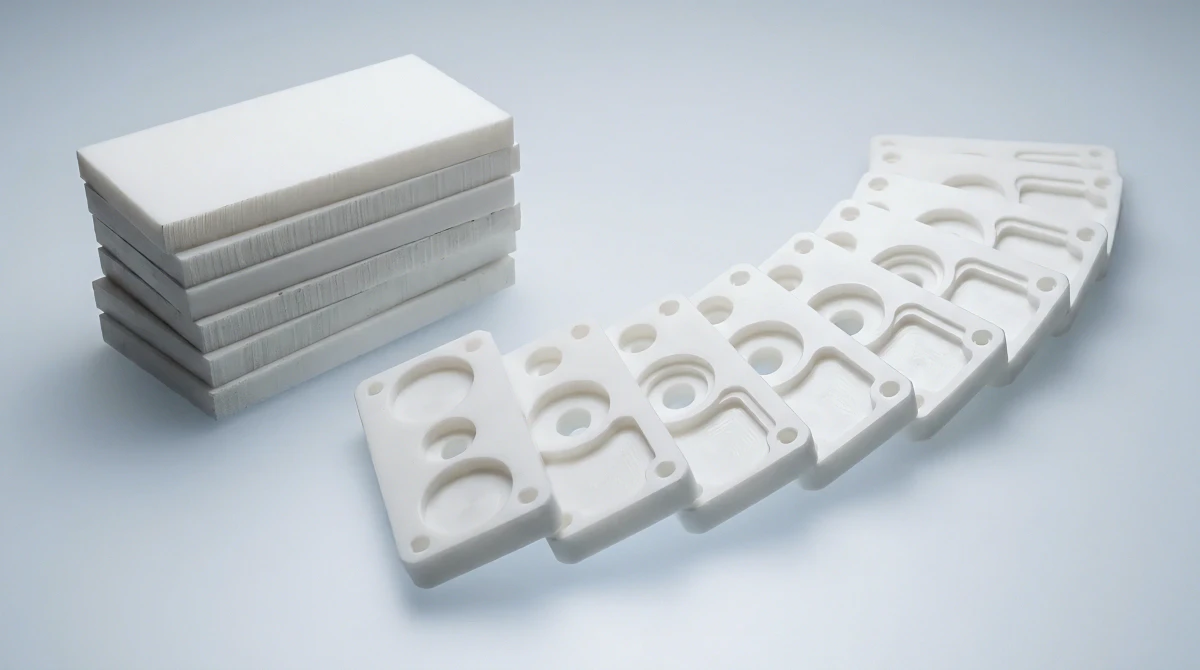
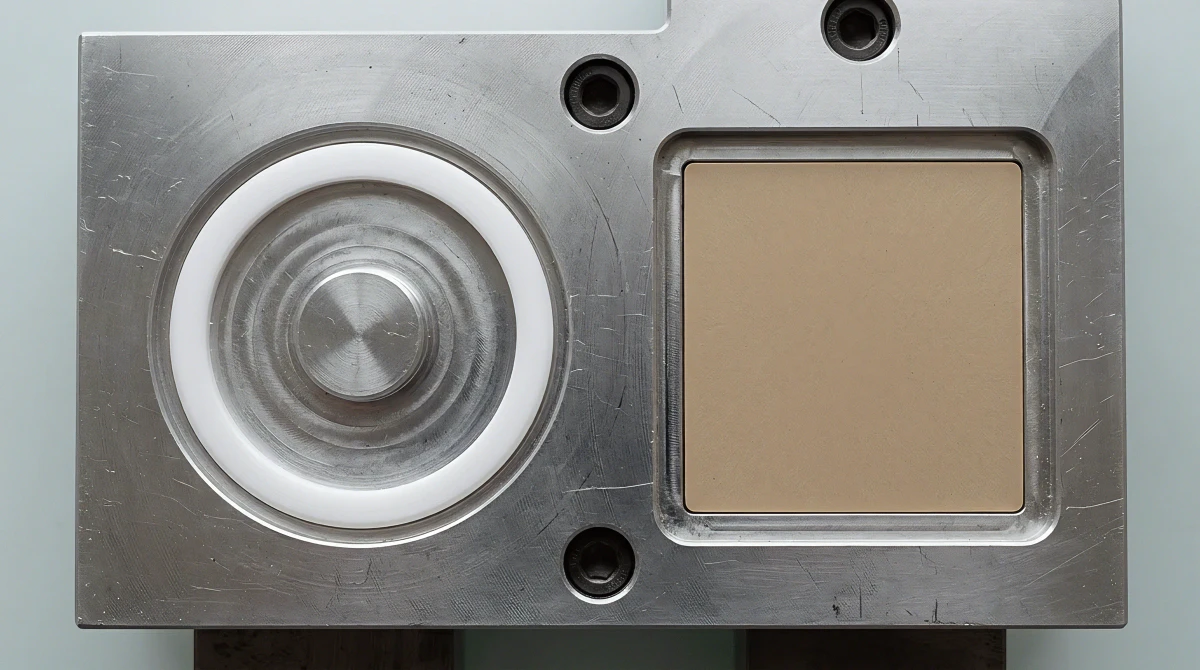
A vacuum plate is a fixture that holds flat plastic stock by atmospheric pressure over its whole underside, so no jaw touches the edge.

Every Vacuum Plate article of the Plastic CNC Resources, newest first, each written from published standards, research and makers’ data.

Meaning

A vacuum plate is a fixture that holds flat plastic stock by atmospheric pressure over its whole underside, so no jaw touches the edge. Mitsubishi recommends vacuum plates for plate parts, with surrounds on the plate for further support. Röhm describes the same method for acrylic sheet. It suits plastic because it spreads the hold instead of pinching the part.

Holding Principle

Surrounds are raised edges or pins on the plate that stop the part sliding. Röhm asks that sheet held by vacuum or by clamps is held firmly, to avoid fluttering or splitting. A vacuum table spreads the hold over the whole face, which avoids the clamp distortion Tangram warns about. It suits stiff stock such as PEI well. For soft UHMW-PE it is one of the usual answers, beside soft jaws bored to the part.
Read More

Sealing Limits

Three conditions limit a vacuum hold, as matters of engineering sense more than printed limits. The sealed area has to carry the cutting force, and every pocket that opens reduces it. The underside has to be flat enough to seal, which a bowed plate may not be. Chips have to leave, because a chip trapped under the part lifts it. Mitsubishi suggests vacuuming dry chips from the machine.

Thin-Sheet Practice

Thin sheet needs a sacrificial board on top of the plate. It performs the function Röhm asks of a flat, solid support, so the underside does not chip as the cutter breaks through.

Second-Side Effect

A plate that bowed after roughing is pulled flat by the vacuum, cut flat and springs back when released. The finishing pass is therefore light.

Reuse Across Batches

Once a vacuum plate with surrounds exists for a part, every later batch reuses it. Its edge allowance and clamping area also set how many parts fit on one plate of stock.
Flatness and Warp of Thin Machined Plastic Plates

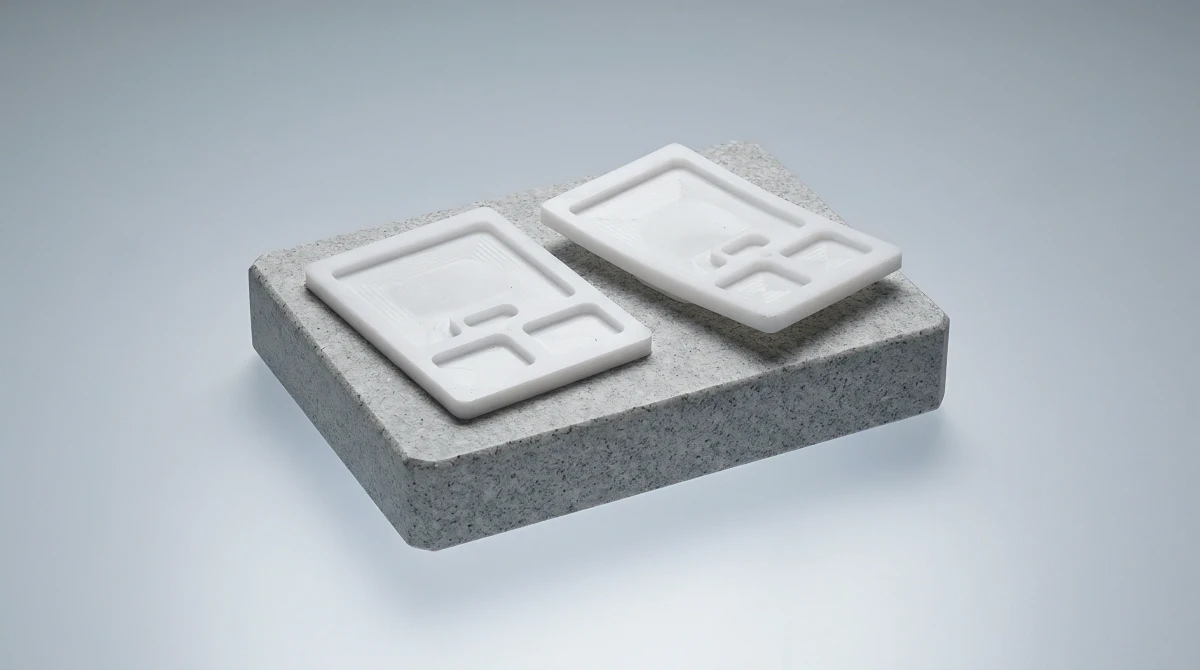
Thin plastic plates bow when stress, heat, clamping or moisture act on one face more than the other, so flatness is planned through stock, sequence, rest and measurement.

Why Thin Machined Plastic Plates Lose FlatnessA thin plate loses flatness when the stresses on its two faces stop balancing. Mitsubishi Chemical Advanced Materials (MCAM) explains the mechanism in its machining guide: extrusion, molding and machining leave residual stresses inside a thermoplastic, and when material is removed or the part meets elevated temperatures, those stresses redistribute and cause warping or dimensional change.

Sizing a Machined Plastic Run From Blanks to Batches

A machined run is sized from weeks and consumption, converted to plates and batches, and then matched to cutters and fixtures by run length.

How to Size a Machined Plastic RunCount the parts the program will consume until the next process delivers, add a spare for parts lost in testing, convert the total to blanks by nesting, and group the blanks into batches that share a rest, an oven load and a measuring session. Then choose the cutter and the fixture by the length of the run.

Holding Plastic Parts for CNC Machining Without Bending Them

Plastic parts distort under clamps that metal parts shrug off, so the hold, the support and the symmetry of the cut set the final size.

How to Hold a Plastic Part on a CNC MachineHold it on as much surface as the geometry allows, with the lowest force that keeps it from moving, and with every thin wall backed by something solid. That sentence compresses three recommendations that recur across the stock-shape makers' guides: light clamping, support under the cut, and distribution of the force by vacuum or soft jaws instead of point contact.

UHMW-PE and HDPE Stock for CNC Milling and Turning

UHMW-PE wears longest and HDPE holds shape better, and both need sharp tools, chip control and a stated measurement temperature to hold size.

UHMW-PE and HDPE Differences for Machined PartsBoth are polyethylene, and the difference starts with chain length. Mitsubishi describes its TIVAR 1000 Virgin UHMW-PE as setting the standard for ultra high molecular weight polyethylene shapes, with a combination of wear and corrosion resistance, a low-friction surface and excellent impact strength.

Request a Plastic CNC Quote

Send the 2D drawing and the 3D file, with the quantity and the stage of the project. An engineer replies within 1 working day.

The quote form, the mutual NDA and the private folder for your files are on Protolis Atelier, with Plastic CNC chosen.

Request a Quote