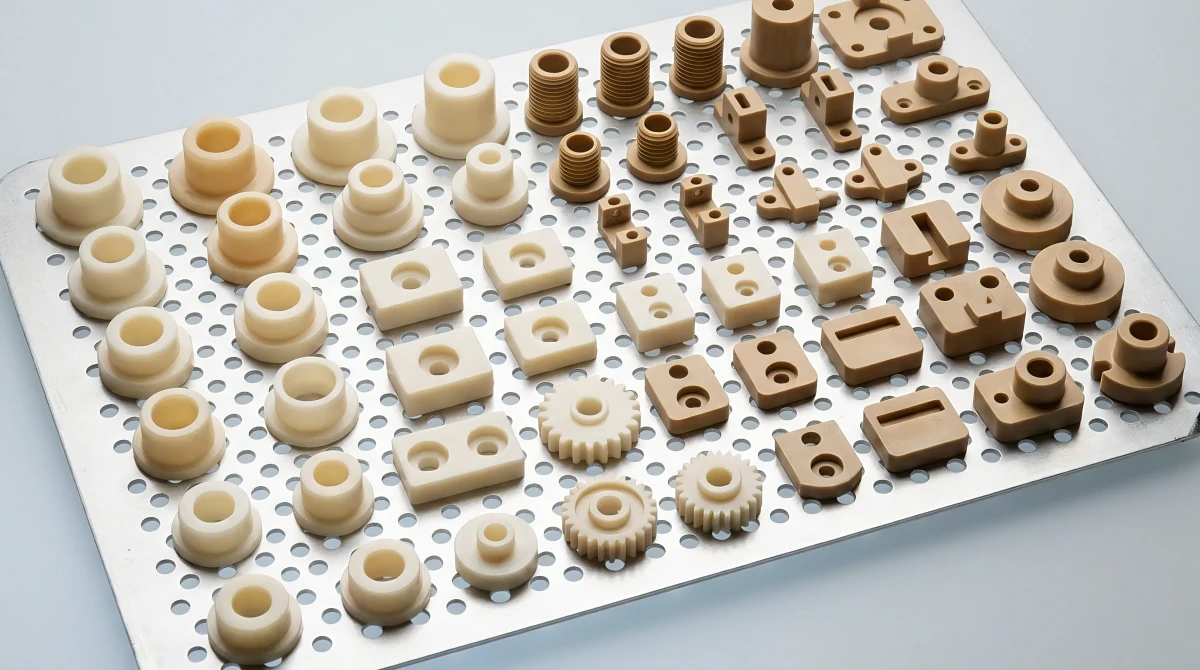
Hold Temperature

The hold temperature is the set point at which an annealing cycle keeps a plastic part long enough for its internal stress to relax.

Every Hold Temperature article of the Plastic CNC Resources, newest first, each written from published standards, research and makers’ data.

Meaning

The hold temperature is the set point at which an annealing cycle keeps a plastic part long enough for its internal stress to relax. It depends on the polymer and sits well above the service temperature. The time at the hold depends on the wall, at 10 minutes per millimeter in the Mitsubishi and Quadrant cycles.

Published Values

Mitsubishi’s 2026 guide prints 155 °C (311 °F) for acetal and 160 °C (320 °F) for unfilled polyamide. Polyamide 66 with 30 percent glass holds at 170 °C (338 °F), and PET-P at 155 °C (311 °F). Polycarbonate holds at 130 °C (266 °F), and UHMW-PE at 130 °C (266 °F). PEEK takes 250 °C (482 °F), and PPS, PPSU and PEI take 200 °C (392 °F). PSU takes 170 °C (338 °F).
Read More

Edition Differences

Quadrant’s 2014 edition agrees on most rows and differs on four. It gave acetal and PET-P 150 °C (302 °F) and unfilled polyamide 150 °C (302 °F). Polyethylene, as the guides group it, shows the largest gap, 80 °C (176 °F) against 130 °C (266 °F). The guides group their grades differently, so a table is read for the exact trade name. The safe source is the current document of the maker of the grade in hand. Mitsubishi’s guide holds POM-C at 155 °C (311 °F) and nylon at 160 °C (320 °F). It holds PET-P at 177 °C (350 °F) and polycarbonate at 135 °C (275 °F).

Relation to Heat Deflection

The hold sits near the top of a polymer’s thermal range. Mitsubishi’s acetal hold is 155 °C (311 °F). The acetal sheets give 158 to 169 °C (316 to 336 °F) for deflection at 0.455 MPa (66 psi). The PEI hold of 200 °C (392 °F) matches its deflection temperature at 1.82 MPa (264 psi). The part is fixtured and carries no test load, which is why the two figures can sit so close.

Special Case

Röhm anneals cast PLEXIGLAS GS acrylic at 80 °C (176 °F), and unformed parts up to 100 °C (212 °F). Quadrant anneals PBI in nitrogen at 20 °C (36 °F) above the expected maximum operating temperature. That hold is kept between 150 and 350 °C (302 and 662 °F).

How Long Resting, Annealing and Drying Add to Machined Plastic Parts

In a machined plastic order the cutting takes minutes, while resting, drying and heat treatment take days, so the drawing sets the lead time.

Where the Calendar Goes in a Machined Plastic OrderMost of the elapsed time in a machined plastic order is spent on stock preparation, resting, heat treatment, drying and measurement at a controlled temperature, and the cutting is a small fraction. When a part needs none of those steps, it goes from blank to finished in the machine time plus setup and deburring.
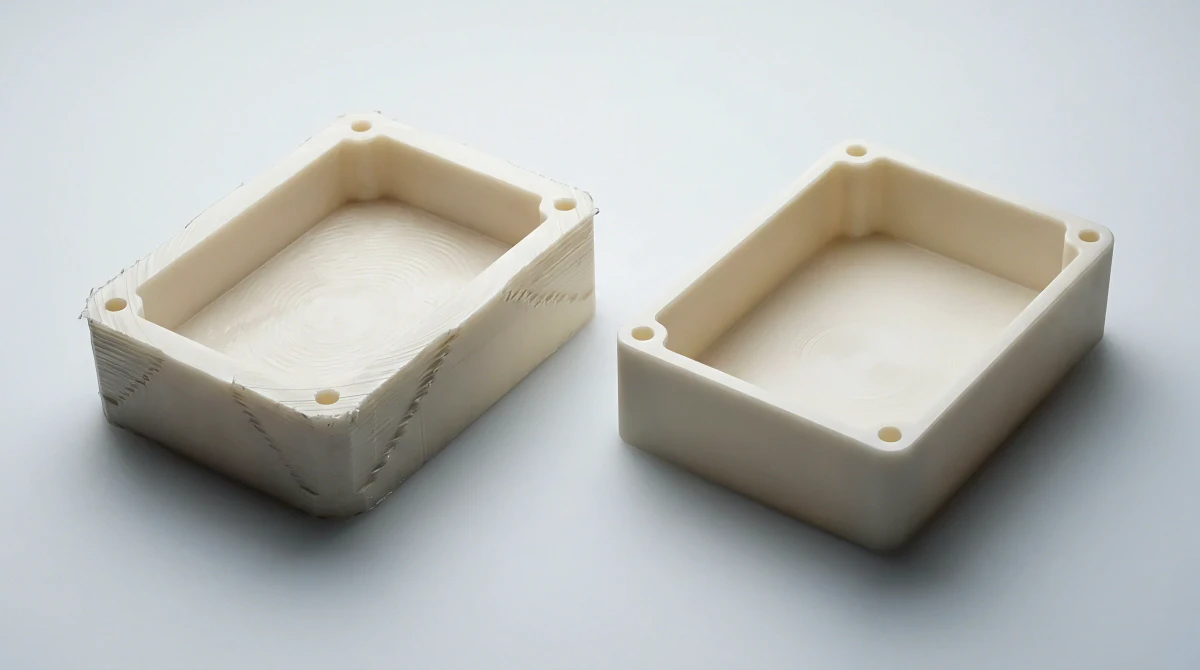
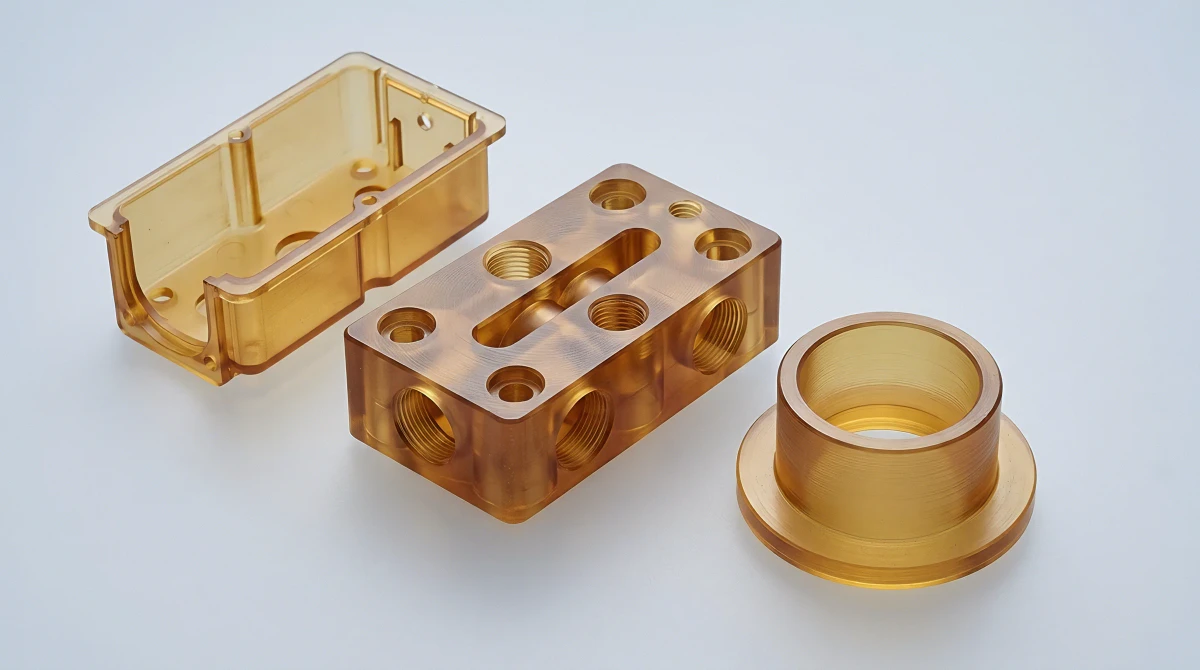
Annealing Machined Plastic Parts Between Roughing and Finishing

Annealing between roughing and finishing trades oven days for flat, stable parts, and it pays only when stress, shape or tolerance demand it.

When a Machined Plastic Part Needs AnnealingA machined plastic part needs an intermediate anneal when it has tight tolerances, an asymmetric shape, or a large share of its blank removed, and when it does not need one the stock maker has already done the work. Ensinger states the starting condition: its semi-finished products are always annealed after production, which is why a first cut can start without a stress-relief step.

PEI Ultem Stock for CNC Machined Parts

PEI holds stiffness and shape at heat, and it asks for dry cutting, careful fluids and an annealing decision before the first part is cut.

PEI Ultem Properties for Machined PartsPolyetherimide, PEI for short, is an amorphous thermoplastic, and Ensinger, which extrudes it into rod and plate, notes that it is commonly referred to as ULTEM plastic after the resin's trade name. Ensinger describes the material as having high mechanical strength and rigidity, exceptional creep resistance over a wide temperature range and very good hydrolysis resistance, and as inherently flame retardant with low smoke emission, which makes it a preferred material for aircraft interiors.

Request a Plastic CNC Quote

Send the 2D drawing and the 3D file, with the quantity and the stage of the project. An engineer replies within 1 working day.

The quote form, the mutual NDA and the private folder for your files are on Protolis Atelier, with Plastic CNC chosen.

Request a Quote