Meaning
Clamp pressure is the force a vise, chuck or fixture applies to hold a plastic part, which can deform it before and during the cut. Tangram Technology notes that plastics deform under clamp pressure that a metal part would not notice. Quadrant states the balance. Machining forces on plastics are lower, the parts deform if clamped too tightly, and a part held too lightly can leave the fixture.Overclamping Effect
A bore finished while the part is squeezed in a chuck returns to a different shape when the chuck opens. A ring held by three hard jaws is cut round while it is slightly triangular, and the bore follows the ring back. The error is invisible on the machine and obvious on the gauge. Ensinger advises avoiding high tensional forces to avoid distortion.Read More
Hard-Grade Limit
Quadrant asks for light to moderate clamping on PBI, PAI, PI and filled PEEK and PPS. Its instruction is never to try to force the part. It pairs the light hold with low cutting speeds and cutting depths of at most 1 mm (0.04 in) for some of these grades.Even Distribution
Mitsubishi suggests fixed-pressure jaws on newer machines, so the grip does not depend on operator feel. Collets and vacuum plates spread the load over more surface than point clamps. A plate part is held by the smallest force that stops it moving and the largest area that spreads it.Measuring Fixture Pressure
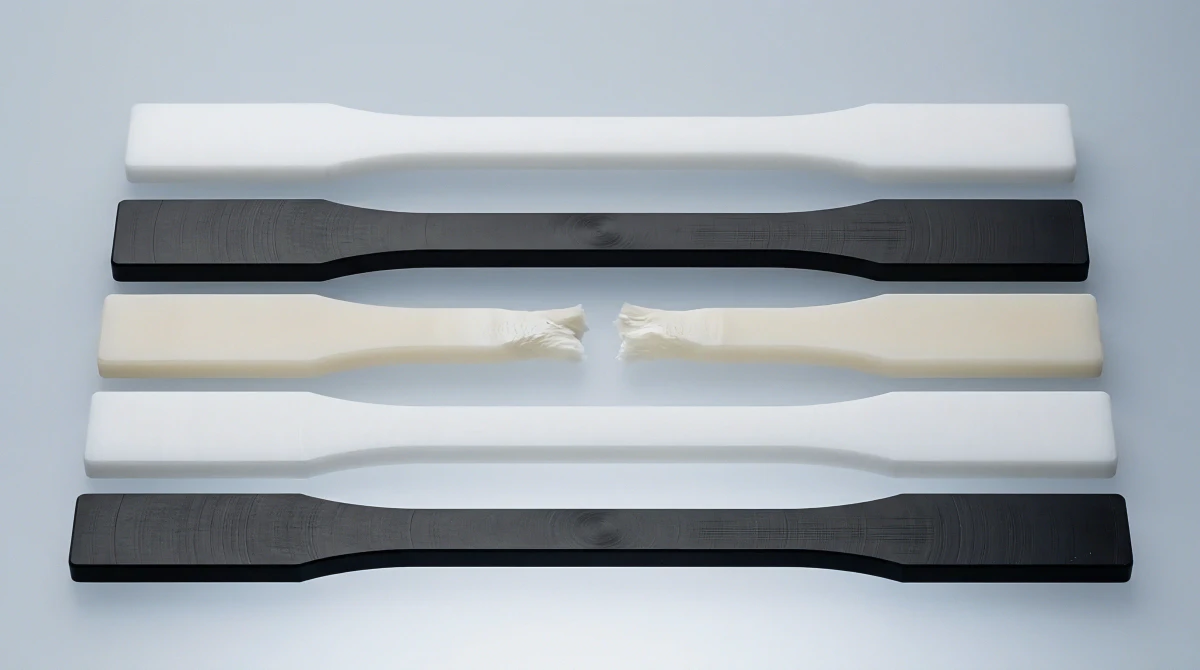
The ASTM D638 article lists clamp, bolt and fastener loads among the ways a machined part differs from a test bar. The inspection plan keeps the clamping force on the measuring fixture as low as on the machine. A part clamped harder for measurement reads a shape it does not have when free.