Cast Polyamide PA6G

Cast polyamide PA6G is a cast nylon grade, the material of a 2018 end-milling study cited in these resources.

Every Cast Polyamide PA6G article of the Plastic CNC Resources, newest first, each written from published standards, research and makers’ data.

Meaning

Cast polyamide PA6G is a cast nylon grade, the material of a 2018 end-milling study cited in these resources. The study tested humid and dry plates, so it shows how much the state of the stock matters. Like other nylons, PA6G takes up moisture from the air.

Source Study

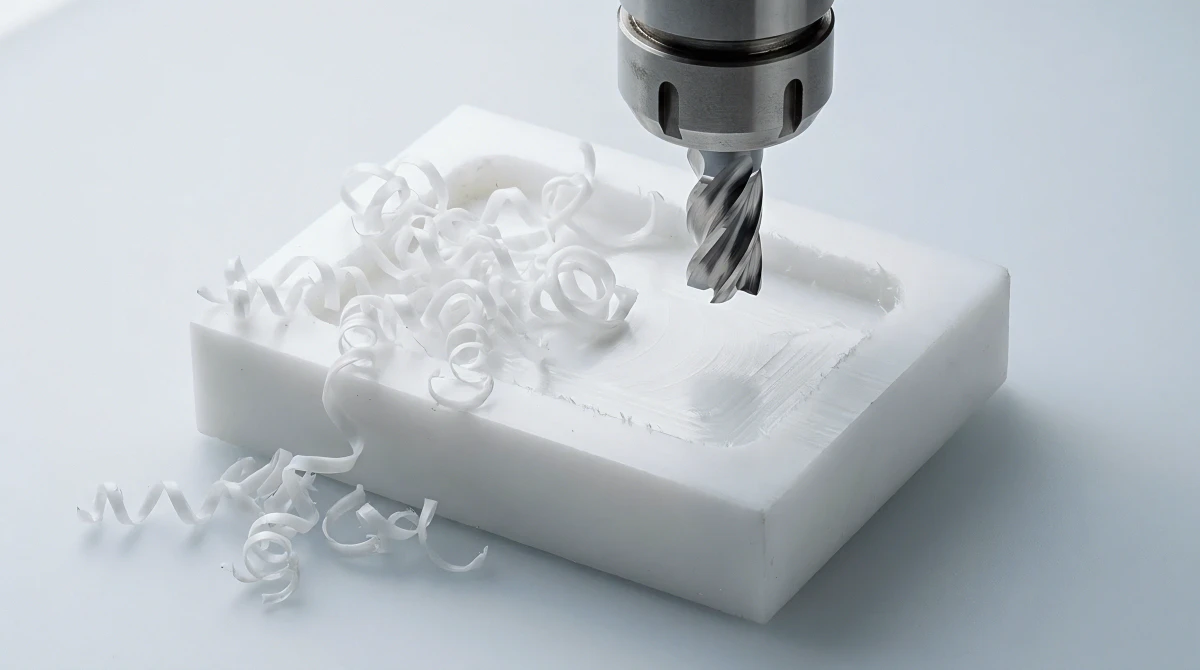
Mustafa Bozdemir of Kırıkkale University end milled PA6G plates with carbide and HSS tools. He varied cutting speed, feed, cutter diameter and depth of cut, and held the plates humid or dry. He then modeled surface roughness from those inputs. The study’s conclusion concerns prediction accuracy and sets no new cutting rule.
Read More

Humidity Effect

The study describes the material as vulnerable to humidity up to 7 percent. Choosing humid and dry samples as an input shows that the stock’s moisture is a variable alongside the cut. A plate cut wet and measured dry will not hold the same size.

Shop Practice

The timing article in these resources draws the shop rule. A nylon part machined from wet stock and then dried can end up smaller than drawn. A careful supplier dries or conditions the stock first or accounts for the shift. Asking whether stock is dried before cutting adds one line to a quote request.

Related Data

Mitsubishi’s turning data for polyamide run at 200 to 500 m/min (656 to 1,640 ft/min) with HSS or carbide. Quadrant dries nylon parts in a vacuum oven at 60 to 70 °C (140 to 158 °F). It allows at least 24 hours per 3 mm (0.12 in) of thickness. Mitsubishi holds unfilled polyamide at 160 °C (320 °F) when annealing.
Surface Finish of Machined Plastics by Material and Tool

Measured roughness on machined plastics follows feed first, then tool edge and material, and a finish call-out needs its parameter, surface, direction and part condition.

What Surface Finish Machined Plastics Reach and What Sets ItTwo open studies give a measured range for ordinary turning and milling of tough engineering plastics. Turning HDPE and PA6 with a carbide insert produced average roughness (Ra) from about 2.1 µm (83 µin) to about 11 µm (439 µin) across the tested conditions.

Cast and Extruded Nylon PA6 Stock for Machined Parts

Cast and extruded PA6 share a name but not their stress, crystallinity, chips or moisture behavior, and a machined nylon part keeps changing size after the cut.

Cast or Extruded PA6 for a Machined PartCast PA6 is usually the better machining stock when the part is large, flat, stiff or close-toleranced. Extruded PA6 is the tougher, more elastic choice for smaller parts where impact strength and elongation matter more than the last hundredth of a millimeter.

How Long Resting, Annealing and Drying Add to Machined Plastic Parts

In a machined plastic order the cutting takes minutes, while resting, drying and heat treatment take days, so the drawing sets the lead time.

Where the Calendar Goes in a Machined Plastic OrderMost of the elapsed time in a machined plastic order is spent on stock preparation, resting, heat treatment, drying and measurement at a controlled temperature, and the cutting is a small fraction. When a part needs none of those steps, it goes from blank to finished in the machine time plus setup and deburring.

Request a Plastic CNC Quote

Send the 2D drawing and the 3D file, with the quantity and the stage of the project. An engineer replies within 1 working day.

The quote form, the mutual NDA and the private folder for your files are on Protolis Atelier, with Plastic CNC chosen.

Request a Quote